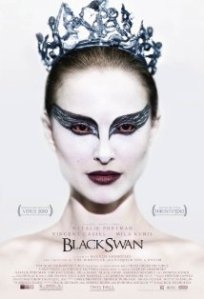
 Black Swan is a visually gorgeous and psychologically probing film. It secures the archetypal female psyche for the viewer and vivisects it on-screen. This painful and nearly surgical opening of classic female struggles and vulnerabilities make it disturbing and raw over and above any particular plot or character complexities.
I don’t agree with much of the film’s interpretation in other reviews, as most reviewers tend to just accept the two lead dancers’ characters as apples-to-apples stand ins for the plot of Swan Lake. I didn’t see a lot of simple good and evil. I did see a lot of complex desire and confusion. There is a difference between fictional animals and “real” women.
Note: I wouldn’t call this a “spoiler alert” exactly, but if you plan to see the film and want to go with a clean slate, you might read this post afterward.
Last year’s post What DO Women Want? looked at researchers’ conclusions that, at least when it comes to turn-ons, women want to be wanted; but that conversation was only about one area — albeit a significant area — of female desire, namely sexuality. Black Swan climbs much higher up the totem pole of wants, and uses the juxtaposition of characters Nina and Lily to illustrate the depth of female longing for freedom from consequence.
Certainly, every person spends moments or even huge chunks of time wishing for the freedom to just do what he or she wants to do without having to worry about what comes next. “Personal responsibility” is a modern catch term, and there are raging debates about and private businesses built on the idea that we can all make happen whatever we want to have happen. Black Swan carves out something more refined, stripped down, and basic. Via the culture of professional ballet, the film is a sharply crystallized reminder that women tend to bear a uniquely warped burden of perceived responsibility for everything in their worlds.
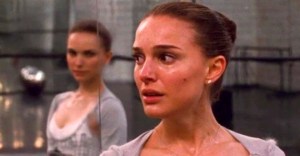 There is a fair amount of cliche, but that is exacerbated if you believe the main characters are truly light and dark. The character of Lily is not “the dark side.” I suggest the character does not even exist outside of Nina’s hallucinations. The dead giveaway is her enormous back tattoo — does anyone seriously think a professional dancer would be allowed onstage with something like that in the New York City Ballet? There are plenty of other signs. Lily stays up all night clubbing, bedding strangers, taking recreational drugs, and drinking the night before she is on stage. She doesn’t warm up before she dances. She smokes. She eats cheeseburgers. She’s never really worried about anything, ever. She leads an entirely stress-free existence. She makes friends, ignores authority, and generally thinks life is a blast.
It’s difficult to pin this character as evil, unless you frame her persona as an extreme repression of someone else’s psyche. Nina starts to interpret Lily as evil (“She’s after me!”) because she, Nina, is so far locked outside of her own sense of balance. She’s operating in a world where she doesn’t know how to relax, even a tiny bit. When she tries it, she’s tipped so far out of whack that she (if we are to believe hallucinations) attacks her mother, mutilates herself, stabs Lily, and generally loses her mind. It is Nina’s unbalanced life that is the dark side.
Women still tend to be socialized to believe that we are responsible for an obscene amount of things that either don’t matter or that we never had anything to do with anyway. Should I have eaten that cookie? Did I hurt his feelings? Oh, I couldn’t cheer her up. Is my child smart? I don’t work out enough. That was the wrong thing to wear. I should give more of my time. I should give more of my money.
Maybe if I just…….
Black Swan is brilliantly constructed because it’s impossible for me to win the argument that Lily isn’t real, just as Nina can’t prove what she thinks is real. The film perfectly puts me or you or anyone viewing it in the same position as Nina. I can’t “prove” it via words on a page or screen. But I know that most women struggle to put their lives in a healthy balance, to know what their own dreams are vs. the dreams they are living for others, and to spend just one full day not worrying about how they could have made life easier or better for someone else.
Oh yeah. And to eat a big juicy cheeseburger and not care.
Images credit: Fox Searchlight Pictures
 I plan to spend a decent amount of time in the coming weeks exploring concepts of health, the body, perceptions of morality and spirituality, and why it seems so many health behaviors are interpreted as having moral relevance. One of my jumping off places will be re-reading Flannery O’Connor’s short story, A Temple of the Holy Ghost.
 I am now entirely distracted from my original purpose, and ready to read and re-read everything this woman ever wrote! I am missing The South today, and thinking of the way it has birthed and continues to nurture great writers — human beings with a sense of place and a connection to either the grotesque or realism, depending on your point of view. As O’Connor said, “anything that comes out of the South is going to be called grotesque by the northern reader, unless it is grotesque, in which case it is going to be called realistic.”

 Esse Diem