I have a friend who, when he moved to West Virginia, was taken aside at a cocktail reception and told knowingly, “One great thing about this state, the ladders are short.”
The ladders are short meant that unlike many other places, an ambitious person can climb very quickly to positions of power and recognition without too much effort or time invested. Ten years ago I didn’t think this was such a bad thing. Today, I’m rethinking that belief.

The Short Ladder
Let’s start with the good side. It is absolutely true that due to the very small pool of college-educated people in our state, there is limited competition for job opportunities that require a degree. I moved to Charleston from Chapel Hill, which was the opposite environment – “The Triangle” of Raleigh-Durham-Chapel Hill is one of the richest regions of educational attainment in the country. NC State, Duke, and UNC support a community where 3 out of 4 people have at least a B.A. In West Virginia, 3 out of 4 have never been beyond high school.
So there is some basic excitement one can generate in these parts by just showing up and being willing to engage a project or problem. With the economy being what it is today, I think it is even more likely than it was when I moved here that someone can advance their opportunities for leadership experiences and promotions to decision-making positions on a compressed timeline. What it may take 10 years to build elsewhere may be accomplished here in less than 5 if you play your cards right and know the right people. Before I had been in state one year, I served as the executive director of two nonprofit organizations (simultaneously) and was appointed special assistant to the governor. I say this to underscore that I didn’t just observe it, I lived it; and quite honestly, it was thrilling. I don’t know that I wouldn’t take these opportunities again if I had a “do-over,” but I certainly would proceed with greater caution.
Now, the bad side. There is a lot to be said for taking time to get somewhere. The process reminds me of building a house. The faster it goes up, the less likely it is to be well-constructed. It may be pretty, but the first heavy rain shows the roof leaks.
Taking time also mitigates the dynamic of ambitious people having a sense of owing someone for their opportunities. I see a lot of young gun types taken under the wing of the old guard, helped along quickly, and then just as quickly losing their edge by becoming part of the status quo overnight. One goes from working on reforming the system to protecting turf much faster here than in what I call the natural world. Sadly, this is exactly what we don’t need in West Virginia.
A mass exodus of young people for opportunities elsewhere 20 years ago contributes to older professionals being anxious to hire those they see as having potential to succeed. That exodus left a big hole that will take a long time to heal. Sooner or later, folks start to realize what’s under their feet is a little thin. The politics of elected office as well as the simple politics of human nature start to show through the paint, and who owes what to whom becomes an issue.
Looking down from the short ladder reminds a person that though he or she may be up, they are not that far up. Another unfortunate feature of the short ladder is that it often tops out abruptly. No one wants to go down, but where to next? I see more than a few frustrated people at the end of their short ladders.
This is a cautionary tale. In no way do I think this is every story or that everyone who takes advantage of an attractive offer early in their career is making a mistake or destined to fail. But I do think there is much more to the decision than saying yes. It is an unusal situation, and requires wisdom that is likewise unusual in the very people most likely start up the short ladder.
Before you put a foot on the short ladder rung, ask yourself if you wouldn’t really rather wait for a good, strong, taller ladder. Perhaps better one of those than 5 or 6 of the others. As my girlfriends who lived on the top floor of our (elevator-less) college dorm used to tell the guys, “It’s worth the climb.”
 When she was a student, this woman joined a student-led group of Christian women who would meet regularly for prayer circles. Sounding benign enough, it soon proved to be anything but. The young women would gather around, close their eyes, and offer up “prayers” for others at their school. The “prayers” tended to go something like this: Heavenly Father, we ask for your grace and blessing on Leigh Anne. Leigh Anne spent the night with David, Lord, after the formal last weekend. Lord, we just ask that you help Leigh Anne ask for your forgiveness for her sin…………Oh Lord, Todd is drinking whisky after breakfast in the commons. He thinks that we do not see, but we know oh God your mighty eye sees all. Please help Todd………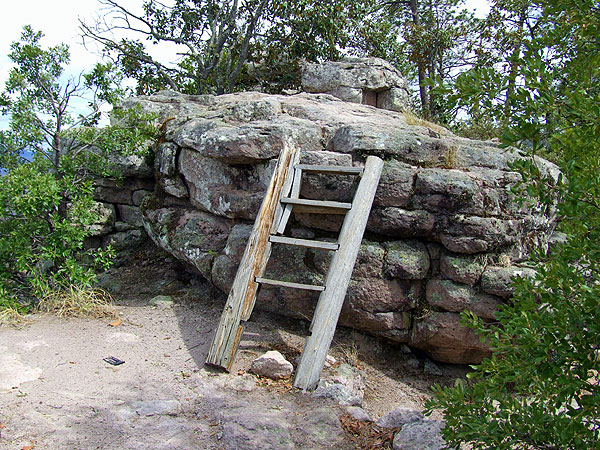
 Esse Diem