Hashtag: Lincoln

Yesterday there was a thought-provoking post on The Miller Times.  I read it, tweeted it, marked it as a favorite post, and moved on; at least I thought I moved on.  I woke up at 2:40 a.m. and these lines were still roaming around my brain looking for a place to rest:

I can’t help but think massive political protests/rallies/marches/shindigs/soirees have become arbitrary. We’ve got social media now, and sadly, a hashtag on Twitter goes a lot farther than 1,000,000 people standing united at the Lincoln Memorial. I admire the dedication, but the whole process is kind of antiquated.

This idea lingers because in just three short sentences it did more to jar my thinking about the impact of the social media revolution than anything I’ve heard anyone else say, including Bill Gates, the Google boys, and the rest of their ilk.  It helps me process why, even though I’m on board and the train has left the station, I’m still not sure where the trip is taking us.

The massive cultural shift that came with our super-connections and constant availability must be something as seismic as the dawn of safe, affordable, socially accepted forms of contraception taking root in the United States in the 1960’s.  It is nearly impossible for me to imagine an America where couples didn’t sleep together whenever they felt like it out of  the fear of unwanted pregnancies, and yet I know it’s the world where my grandparents grew up.  The tentacles of social change are elaborate and far-reaching from this single event, and of course not everyone thinks it’s all good.  I think it’s fundamentally great, but would agree that there are new dynamics in people’s lives that are not as simple as “great.”

This is much like I feel about the changes to everything we do now, with such a huge portion of life lived online.  The communication and education opportunities are incredible.  The avenues for better understanding remote corners of the world are expanded.  Many aspects of life are safer and more secure.  Used well, social media tools allow for phenomenal new levels of productivity.  And yet….there’s that pesky Lincoln Memorial thing.   It woke me up before the crack of dawn, and I’m guessing this morning won’t be the last time.

I’m glad I don’t have to get on a bus and go to Washington, DC, to be heard.  To be perfectly frank, I don’t have the time, money, or energy to participate in a march of any kind right now.  But as the last Esse Diem post about Good Will Hunting explores, I know what it’s like to stand at the foot of the Lincoln Memorial.  I’ve stood there more than once, and it is an experience unlike any other.  I expected to feel small, and yet I felt enormous. 

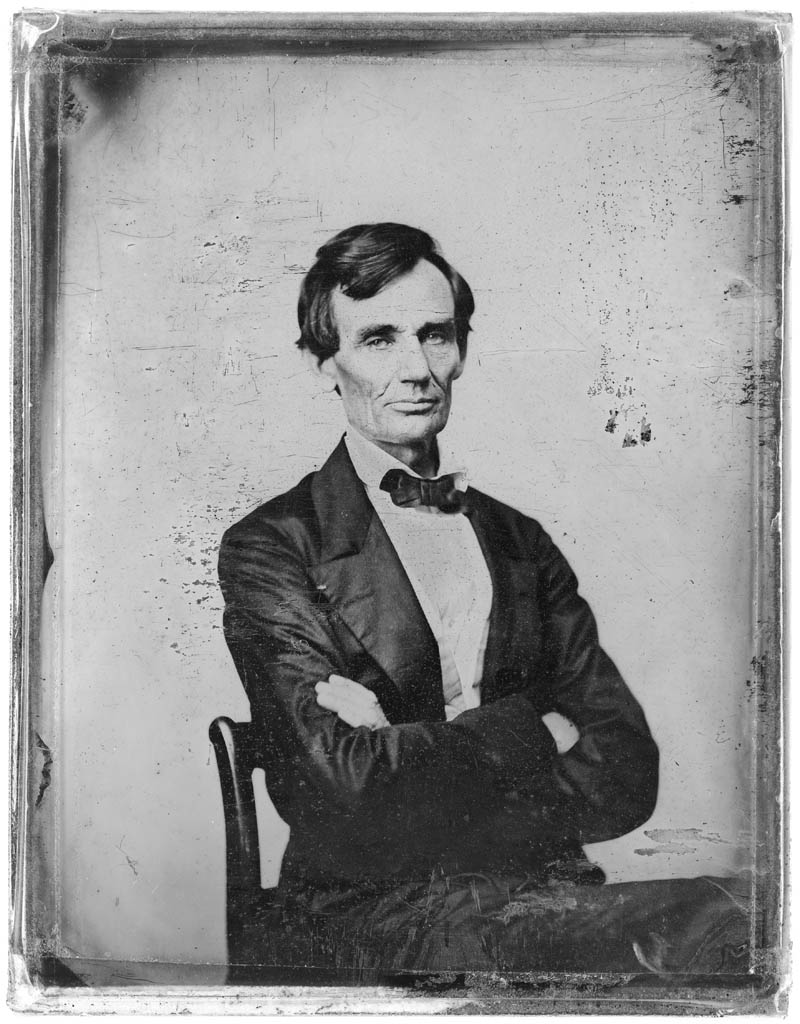
Many people joke that Abraham Lincoln was fortunate to live in an age without television.  He was quite an unusual and some say unattractive combination of proportions and physical features.  History suggests he was soft-spoken, humble, and concise.  The words of the Gettysburg address are some of the most well-known, beloved, and nationally signficant words every spoken in the United States’ history.  From that address (emphasis is mine):

The world will little note, nor long remember what we say here, but it can never forget what they did here. It is for us the living, rather, to be dedicated here to the unfinished work which they who fought here have thus far so nobly advanced. It is rather for us to be here dedicated to the great task remaining before us—that from these honored dead we take increased devotion to that cause for which they gave the last full measure of devotion—that we here highly resolve that these dead shall not have died in vain—that this nation, under God, shall have a new birth of freedom— and that government of the people, by the people, for the people, shall not perish from the earth.

Our world of online political and social action is real, and it is here.  We are not going back.  But if you doubt that Americans standing — being physically present — at the Lincoln Memorial still means something, I would say go.  Go alone.  It’s not necessary to get caught up in a demonstration or event.  Go when you can, and stand there with the image and yes, the actual presence, of the man who saved the union. 

It may not change the world in that moment, and it can’t be meaningfully hashtagged or blogged.  It can only be lived, that feeling of being so big inside yourself at the feet of President Lincoln.  Promise you won’t miss it — in real life.

Photo credit: Library of Congress on Flickr.com

How D’Ya Like Them Apples? IQ and Education

Someone asked me last week if I think the bell curve of intelligence quotient scores is even across political parties and political positions.  Without hesitation I said yes.  I don’t see any reasonable explanation for why IQ scores would necessary correlate to a person’s political opinions.  I do think, though, that the likelihood that our nation can even out with some moderate positioning on a range of issues is hampered by our struggles with educational attainment rates and public education dynamics in general.

How can we ever expect to communicate with each other to achieve more balanced and reasoned understanding when test scores and drop out rates indicate we are failing to establish even basic language skills?  And if we never leave the communities where we grew up to learn in an environment with a diverse representation of people from around the country and even the world, how can we develop appreciation for diversity and what people different from ourselves have to teach us?

In the midst of my pondering, I turned to Will.  Will always helps me figure things out.

Good Will Hunting is a favorite film in our house.  We ping back to it often, from personal reasons to conceptual storytelling to a love of Robin Williams in dramatic roles.  A quote that gets a lot of play on a regular basis is, “How d’ya like them apples?”

Photo credit: E. Gaucher

If you’ve seen the movie, you’ll recall Will (Matt Damon) is trying to get the attention and admiration of Sklyar (Minnie Driver) in a bar frequented by Harvard University students.  An arrogant pretty-boy tries to embarrass him by asking him questions about books he’s sure Will has never heard of, let alone read.  Much to his dismay, Will knows the books.  Very well.  Well enough to end up humiliating the other guy, and well enough to get Sklyar’s phone number on a cocktail napkin before she leaves.  Outside the bar, Will knocks on the glass to get stuck-up’s attention.  “Do you like apples?” Will asks.  “What?”  the guy insides replies.  “I said, do you like apples?”  The guy shrugs and nods, confused.  Will slams the napkin with the newly inked phone number up on the glass and into his face.  “Well, I got her number.  How d’ya like them apples?”

The scene is a classic illustration of the disconnect between education and intelligence.  The entire movie pivots around questions of what it means to know anything.  In the apples scene, Will comes out on top.  He has exposed himself to great works of art, and he has a photographic memory that allows him to regurgitate on cue lengthy analyses of everything from sculpture to political theory.  What’s brewing underneath his cocky persona, however, is anything but educated.  We find out later in the story that he has, for good reasons, completely isolated himself from real life experience.  He lives in his head with the thoughts and lives of others running roughshod over his courage to engage life on his own terms, and to have a true education.

Sean (Robin Williams) nails him on it with this memorable monologue:

So if I asked you about art, you’d probably give me the skinny… on every art book ever written. Michelangelo? You know a lot about him. Life’s work, political aspirations. Him and the pope. Sexual orientation. The whole works, right? I bet you can’t tell me what it smells like in the Sistine Chapel. You never actually stood there and looked up at that beautiful ceiling. Seeing that. If I ask you about women, you’ll probably give me a syllabus of your personal favorites…… But you can’t tell me what it feels like to wake up next to a woman… and feel truly happy. You’re a tough kid. I ask you about war, you’d probably throw Shakespeare at me, right? “Once more into the breach, dear friends.” But you’ve never been near one. You’ve never held your best friend’s head in your lap… and watched him gasp his last breath lookin’ to you for help. You don’t know about real loss, ’cause that only occurs when you love something more than you love yourself. I doubt you’ve ever dared to love anybody that much. I look at you. I don’t see an intelligent, confident man. I see a cocky, scared sh*tless kid. But you’re a genius, Will. No one denies that.

Will is a smart kid.  Smarter than smart.  But he is lashing out with information as a weapon rather than being willing to let other people teach him anything, and rather than allowing himself to be vulnerable to the many possibilities that he doesn’t know nearly as much as he thinks he does about what life is really about.

Intelligence can be a wonderful thing, and fortunately we know now that there is more than one way to measure it.  Intelligence of any kind, however, requires the humility and depth that only participating in a shared environment of respect for real learning can deliver.  It starts in school, but it hardly ends there.

Actually, if you do it right, it never ends. And that mindset is the one that has the unique power to moderate the sound and fury of today’s political climate, regardless of what else a person believes.