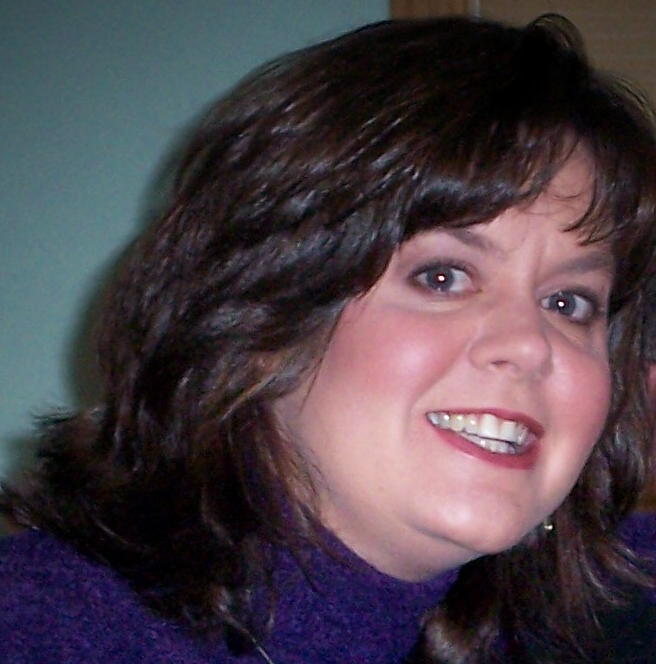
Growing Up (part one) by Christi Davis Somerville

Editor’s note:  This essay holds a special place in my heart, as I spent a lot of time in my own adolescent years with Christi and her family at this homeplace in Loudendale, West Virginia.  I loved reading about the family history of the property, the incredibly funny descriptions of childhood antics, the portraits of Christi’s grandparents’ personalities and character, and the legacy of family ties that thrives in my old friend’s family today.  I was a “South Hills” kid and Christi was my only true friend in the Loudendale community.  I always felt that I had been granted a pass into special world when I would visit her home and her family, and so many years later I read her essay and realize that I was not imagining that.  This is essay is a gift that puts some of my own memories into perspective.

I believe you will love this essay, which is divided into several parts this week.  It surely had me recounting my own family blessings.

Christi grew up just outside the city limits of Charleston, West Virginia, in a middle class home with her parents and younger brother Bobby.   She graduated George Washington High School, obtained a BA in Elementary Education from the University of Charleston and an MA in Special Education/Gifted from Marshall University.

She married Rob Somerville in 1994 and quickly began teaching as an Itinerant Gifted teacher at Midland Trail Elementary. Christi confesses, “ I didn’t know what ‘gifted’ was at the time but I accepted the job any way!”  She taught Gifted for 6 years, serving  12 elementary schools from the eastern part of Kanawha County.

After a series of professional shifts within the education field to establish greater security for her growing family, she began teaching at Cross Lanes Elementary School (CLE) to be with her son when he started Kindergarten.  She now teaches first grade at CLE and her husband is the principal at Anne Bailey Elementary in St. Albans, West Virginia.  They live in Cross Lanes with son Brett who is in the 4th grade.

Growing Up

For as long as I can remember, I’ve felt a deep responsibility to preserve my family’s past, present, and future.  A self-proclaimed family keeper of memories, I dutifully planned and organized family reunions and kept meticulously detailed records of important family events, documenting each with lists of attendees and photographs.  I spent many hours hand copying a rudimentary family tree with sprawling branches in every direction, past and present, like wild lilac bush left unchecked.  However, my well-intentioned efforts all fell by the wayside when marriage, graduate school, my teaching career and a bouncing blue-eyed baby boy kept me from continuing my role as family historian.  Life happens whether it’s recorded for posterity or not.  Besides, the family tree, like the neglected lilac bush, kept growing and evolving wild as I lived my busy life as wife, mother, and teacher.

Not until just recently, a good friend introduced me to the world wide web of family tree research. Thinking this would be a great way to collect and organize all of my family collections, I jumped on the ancestry bandwagon, just to see what I had missed in those ten plus years of neglect.  In order to gain some insight into my own life, growing closer every day to what some refer to as “middle age,” I once again found my spark of curiosity and duty to preserve my family’s past for my family’s future.

I’ve researched for hours upon end the long-lost names, birthdays, marriages, and dates of death of past relatives I’ve never met, living in places I’ve never visited, looking for a connection with something I’ve never experienced.  I found myself wading knee-deep in scanned copies of birth certificates with strange yet poetic names, marriage certificates artfully hand-written in real ink, and death certificates stating causes of death I’ve never even heard of in this day and age.  It’s a daunting task really.  Trying to put it all in perspective—trying to match a name and face to my blood, seeing only hints of familiarity in foggy eyed photographs.  But, as I see it, without my relatives, without the sacrifices they made, I would not have had the tremendous opportunities I have had growing up in West Virginia.  In most of my research I discovered that once my relatives settled among the mountains, they never left.  Generations of my family have lived here—on all sides of my family—since the beginning, even before West Virginia was a state, and some, even before the United States had fought for its independence.  I feel somehow deep down in my soul that I owe them a debt of gratitude because, without my family, well, I simply wouldn’t be here now.

When I think of how I grew up as a generational West Virginian child, I can only imagine that my great grandparents never imagined the blessed life their great-granddaughter would be living.  I think about my poor great grandparents, Grandma and Grandpa Scragg, who worked all day long in the fields just to provide food for their seven children and a few others they had taken into their home to raise.  I think of my great grandfather Salvatore Scalissi, who came from Italy and spoke no English, who landed in a foreign world to make a better life for his family by working in the coal mines of West Virginia, alongside sons, brothers, and cousins.  These names and faces I see are so much more to me than just a wiggling leaf on my family tree.  They are my driving force to make my life the best it can be.

I owe it to them.

(Essay continued, next post.)

Melungeons & Mystery by Anne Clinard Barnhill

Esse Diem is pleased to welcome returning essayist Anne Clinard Barnhill!  This is Anne’s second essay for the Essays on Childhood project.  I am tremendously grateful to Anne for her willingness to share her perspective and writing talent with this initiative.

Anne’s first essay, Winter Solstice, appeared in January 2011.  In Melungeons & Mystery, Anne explores her earliest comprehension of racial prejudice in her community, as well as how she responded to it at the time and since then.  Her writing considers a little-known ethnic group in Appalachia, the Melungeons.

For more than a century, the Melungeons have been the focus of anthropologists, social scientists, and (especially) feature writers for newspapers and magazines. The most common adjective used to describe the Melungeons is “mysterious;” no one seems to know where the Melungeons originated. More significantly, the Melungeons did not fit into any of the racial categories which define an individual or group within American society, they were considered by their neighbors neither white, black, nor Indian.

 — Wayne Winkler, A Brief Overview of the Melungeons

A Google search for images associated with the word “Melungeon” generates some unusually striking human features, and includes such famous faces as Abraham Lincoln and Elvis Presley.

Anne has been writ­ing or dream­ing of writ­ing for most of her life. For the past twenty years, she has pub­lished arti­cles, book and the­ater reviews, poetry, and short sto­ries. Her debut novel, AT THE MERCY OF THE QUEEN, will be released from St. Martin’s Press January, 3, 2012.  She has a wonderful recently launched Facebook page, Anne Clinard Barnhill (Writer), where she networks with fans and other writers.

Her work has won var­i­ous awards and grants. Anne holds an M.F.A. in Cre­ative Writ­ing from the Uni­ver­sity of North Car­olina at Wilm­ing­ton. Besides writ­ing, Anne also enjoys teach­ing, con­duct­ing writ­ing work­shops, and facil­i­tat­ing sem­i­nars to enhance cre­ativ­ity. She loves spend­ing time with her three grown sons and their fam­i­lies. For fun, she and her hus­band of thirty years, Frank, take long walks and play bridge. In rare moments, they dance.

Anne’s awards include:

  • Blumenthal Writer/Reader Series, 1996, 2001
  • Emerging Artist Grant
  • Regional Artist Grant
  • First Place, Porter Fleming Award, Georgia Arts

Melungeons & Mystery

When I was twelve years old, my family moved from Huntington, West Virginia, to a very small town in the north central part of the state where the wild hills seemed a wonderland of color: the early, pale greens of spring giving way to the deeper shades of summer leaves and grasses; the slow turn to yellow, then brown, with sudden red maples dotting the hills like spots of blood.  There was a deep purple weed that seemed to have come from the wand of a dark fairy.  As the leaves fell, they left the trees bare against that bright blue November sky, etchings made by a larger hand than any I knew.  Then, finally, the world made clean again with the white, blinding snows of winter.  In our gray house on the top of college hill, I felt safe and at home in a way I have never been able to recapture.

Though the surroundings were lovely, there was an underside to all that beauty.  That year, as I started eighth grade, I learned about prejudice and the strange contours it can cast over a small community.  I also learned that no matter how lovely the seasons of the earth, humanity could smear such beauty with its ugly handprint, a ragged blur that could keep a person from seeing clearly.

I was the ‘new’ kid and eager to make friends.  I was also budding into womanhood, interested in boys but too shy to show that interest.  In one of my classes, a handsome boy with a blond crew cut and piercing blue eyes stared at me every day.  I would look at him, then turn away.  Each time I returned to see if he was still staring, I met those haunting eyes.  Finally, while looking at me directly, he said, “Kiss me, slobberlips — I can swim.”

I had no idea why he would say such a strange thing to me.  Did my mouth look too wet?  Did I look like I didn’t know how to kiss properly?  Granted, I’d never been kissed, but I had hoped such innocence was not legible from a look at my face.  I was secretly thrilled that he had thought of kissing me and deeply disturbed that he had called me such an unattractive name.  I didn’t know much about boys, coming from a small family: mother, father, two girls.  So, in order to figure out what he meant by the ogling and that strange comment, I asked a girl with whom I had become friendly.

We were in the grungy junior high bathroom, fixing our hair, teasing it into high piles atop our heads.  She was shorter than I was, and very popular.  I decided she would know what to do in my situation.

     “Do you know that boy, Ronnie?” I asked, my voice soft.

     “Ronnie who?” she said.

     “I don’t know his last name — he’s in my history class.  He has real blond hair and blue eyes.  He’s skinny and his clothes are sometimes muddy,” I said.

     “Oh, I know who you mean…why do you want to know about him?” she said.

     “I think, well, I think I might like him — you know, for a boyfriend,” I whispered.

     She turned to face me.

     “You CAN’T like him — don’t you know?  He’s a guinea!” she said.  Her face showed such outrage you’d have thought I said I was in love with Satan himself.

     “What’s a guinea?” I said, shocked at the sudden change in her behavior to me.  She seemed to shrink away from me right there at the mirror, as if I had the famous middle-school ‘cooties.’

      “Don’t you know anything?  He’s from up on the ridge.  That’s where they all live.  White people don’t mix with them,” she said.

This statement had me thoroughly confused — white people??  He was blue-eyed and blonde and looked as white as anyone I’d ever seen.  She made no sense to me.

     “But he is white.  I don’t understand,” I said.

     “He may look white but he’s not.  Just don’t hang around with them or you’ll never be popular here,” she said, her eyes shooting me a warning.

I’m ashamed to say that I did not look at Ronnie again.  And he never spoke another word to me.  But my girlfriend’s information continued to confuse me.  I’d seen the racial tension occurring across the nation — it was the early 1960’s after all.  Dr. King was on TV frequently and I loved the ideas he expressed.  My father, a college professor, reiterated how right Dr. King was and how all people should be treated with respect and dignity.  Though I did not believe in being prejudiced, at least the black/white question made a sort of sense to me — the groups looked different and it was easy to tell who was who.  But the crazy prejudice at my school made no sense whatsoever.  Everyone looked the same — there were no black people that I could see.  Yet, the guineas, labeled such by the natives, suffered terrible abuse and bullying.  Because there seemed to be no rhyme or reason to the bigotry in that little town, I learned there was no rhyme or reason to bigotry anywhere.  Harboring prejudice simply made no sense.

As I grew older, I learned that many students from nearby West Virginia University had studied this tri-racial group, and the Appalachian Mountains housed thousands of what the books called Melungeons.  I became fascinated with their history and story, and ended up writing an early novel about a Melungeon woman.  The book is still in progress and I have hopes it will someday be published.  Now, if you look on the Internet, you can find all kinds of information about this people and their mysterious past.  Some think they are descended from Portuguese sailors who intermarried with Native Americans.  Others believe that when the Virginia colony made being a freed slave illegal, many of the African-American men and women who had earned their freedom as indentured servants headed to the hills for safety.  There, they intermingled with Native Americans.  Another theory suggests the Melungeons are descended from Turkish explorers.  No one seems to know for certain.  What we do know is that as whites expanded west, they did whatever was necessary to secure the best lands for themselves.  They made it illegal for non-whites to own land, and the lumped everyone — African-American, Native American, Arabian — into the non-white category and forced them to register their race.  That way, the white settlers could purchase the flat lands in the valleys, forcing the other people onto the ridges.

Such treatment is part and parcel of our American heritage, regrettably.  The idealistic rights written by Jefferson did not play out fairly; there was the ugliness of reality beneath the beauty of the language of justice for all, just as the majesty of the mountains was marred by those willing to spread prejudice and inequality the way they spread molasses on their biscuits.

These days, I find myself attracted to the mystery of the Melungeon people and am happy to see so many of them taking pride in their heritage.  We are lucky in America.  We have lots of fascinating groups of people — different in culture, religion and outlook–yet, we can celebrate the many cultures just as we celebrate the various flowers of a garden, each petal beautiful in its own way, contributing to the bouquets we treasure.