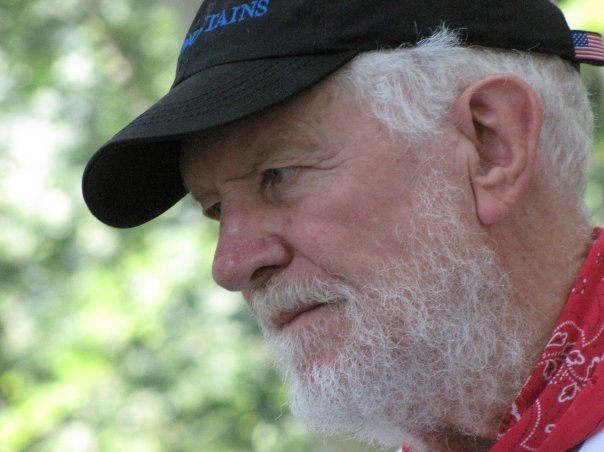
Truman and Me (part 1) by Julian Martin

Julian is the eighth generation of his family born on Big Coal River.  He is a graduate of St. Albans High School where he was an all-conference football player. He has a chemical engineering degree from West Virginia University (WVU) and worked two years in the chemical industry. After one month training to make sidewinder missiles,he joined the Peace Corps as West Virginia’s first volunteer and taught chemistry and coached the track team at a secondary school in Nigeria. Since that time, he has also worked in urban outreach, organic farming, environmental education, and conservation.  He loves his wife and several children, step-children, grandchildren and step grandchildren and two great grandchildren.  Julian’s essay Truman and Me and is a colorful reflection on his growing up experiences on his grandparents’ farm.  (He admits though, “I called it Grandma’s house and farm ever since Grandpa threw a rake at me.”)

The title of the essay comes from his special relationship with his Uncle Truman, who though truly his uncle was also only 3 years his senior, and in many ways more like a brother.

I believe that Julian is an exceptionally talented writer, and that he writes in a uniquely Appalachian “voice.”  He is not afraid to put into words his life’s encounters with things most people would prefer not to articulate: disappointment, anger, embarrassment, confusion, oh and……well, you’ll see.  Let’s just say he gave me a post script of, “You can leave this out if you think it’s best, but 97% of boys have done it and the 3% who say they haven’t are not telling the truth.”

I left it in the essay.

Julian’s writing is by no means all about the things other people don’t want to acknowledge.  His adventures with Truman are honest, fun, and entirely real.  He lets the uninitiated into the world of real boys, like Huck and Tom, and for the initiated it should be a rollicking and poignant reminder of days past.  Days when boys played army, and fought the bad guys instead of doing chores.  When they practiced getting erections and weren’t entirely sure why.  When they had so much fun they threw up, and when they realized their grandma might just be the strongest person in the family.

Welcome to the world of Julian Martin, friends.  It is my privilege to share his essay in 5 parts, with an epilogue.

Enjoy!

Truman and Me

My uncle Truman and I killed millions of German soldiers during the Second World War. One morning before my grandfather Charlie Barker went over the mountain to his job as a laborer at the DuPont plant, he commanded us to hoe the sprouting field corn. I was probably eight or nine years old and Truman was three years older.

To my adult eyes, that corn field is still huge and at our age almost seventy years ago it was daunting.

We hoed as far as the shade of a big sycamore tree halfway down the first row. The ground was sandy from years of flooding which made it easy to dig a foxhole to fight off the Huns. We tossed dirt clod grenades and made appropriate gun noises as we defended our homeland with sticks that felt exactly like guns. Charlie seethed and ranted when he got home and saw our work for the day was a hole in the ground in the first row of corn.

For a while my Grandma and Charlie owned a general store in Ashford, West Virginia, three miles up Big Coal River from the homeplace at Emmons. When I was five years old, Truman and I would run into the store from playing, stick our hands into the loose candy and run like thieves. During one of those escapes Charlie threw a rake at me, at least I thought so at the time. After that I never again called him Grandpa, and the farm was thereafter, “Grandma’s farm.”

Grandma said Truman and I fought like grown men, punching with our fists and rolling around on the floor and under the dining room table. Truman had a three year advantage but he was a little guy, so our fights were usually a draw. We played hard like kids do. We got hungry during one wonderful, uninhibited, wild and joyous day of fighting, wrestling, killing Nazis, running and running. We went in the house several times and scooped out dollops of peanut butter with our fingers. Like horses eating too much corn, I got foundered on the peanut butter overdose. Terrible vomiting ensued and the memory persisted of a thin mixture of stomach acid and peanut butter running out my nose.

It was at least five years before I ate peanut butter again.
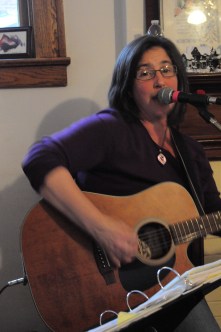
Carbide Camp was Magic by Jean Hanna Davis

Jean is an accomplished singer, guitar player, and sometime songwriter.  She has been performing since the age of 12, in all settings, ranging from concert halls to bars to churches to festivals.  Her family relocated to Charleston, West Virginia from New Jersey when she was 7, and as many times as she has tried to leave, something keeps pulling her back.  Jean and her family live in Princeton, West Virginia.  Her essay explores her experience moving to West Virginia from New Jersey during her early years, and the exceptional “magic” she encountered at a place called Carbide Camp.

Editor’s note:  I am grateful to Jean for revealing the secret world of Carbide Camp.  I was puzzled my entire youth about what Carbide Camp actually was, though I did know that a select number of my friends attended and it seemed to be just as described here, a magical place young people would cling to all year in great anticipation of entering its gates again in the summer.  Any place that can retrieve you as vividly as it does Jean at the end of this essay is someplace special!

Carbide Camp was Magic

My parents are from the Northeast.  Dad was born in Pottsville, Pennsylvania, and Mom was born in Bound Brook, New Jersey.  Both graduated from Bound Brook High School, and Dad went to Kings College while Mom started working for Union Carbide as a secretary.  After Dad finished school, they married and settled in Middlesex, New Jersey.  Dad eventually started working for Union Carbide in Bound Brook.

Union Carbide was a huge chemical company with a long history in the Charleston, West Virginia, area.   It was bought by Dow Chemical Company in 2001.  Union Carbide is probably most famous for the Bhopal Disaster, which happened in Bhopal, India, in 1984.  A storage tank vent malfunctioned and spread poison gas into the atmosphere – over half a million people were injured and more than 4,000 died as a result of exposure to the gas. The same chemical was produced at the plant in Institute, West Virginia, about 9 miles from Charleston.

The area along the Kanawha River in the greater Charleston area was called The Chemical Valley.  When I was young, I remember DuPont, Monsanto, and the Union Carbide operating chemical plants, all in the Kanawha Valley. I’m sure there were more, but the names escape me.

When I was 7 years old, Dad had the opportunity to transfer to Charleston.  He was supposed to be there for several years and move on to “bigger & better things.”  I was in second grade, my sister in Kindergarten.  I remember how sad I was to leave my very best friend, Jennifer Johnson.  We swore to write and to visit, but we never did.

Our extended family was appalled by the idea that we were moving to Appalachia.   “I’ve heard that they don’t have electricity there.”  “You’re going to have to use an outhouse.  They don’t have indoor plumbing.”  We had cassette tapes of all of us, singing along in the most exaggerated HeeHaw accents, to “She’ll be Comin’ ‘Round the Mountain.”  There were lots of “Yee-HAWs” on those tapes.  I even remember references to “black-eyed peas and chitlins.”  I’m sure my uncles had no idea what that even was, but they associated it with the South, and West Virginia was SOUTHERN to them.

As far as they were concerned, we were moving to a backward wasteland.  As a second grader, that changed how I felt about moving.  From that time on, whenever I was asked about college or where I wanted to live when I grew up, my answer was always, “Anywhere but West Virginia.”

We moved to Charleston in January.  Coming from New Jersey, I was overwhelmed by the land. Jersey was FLAT.  These were MOUNTAINS in Charleston.  My house was on a mountain.  We had to go over the mountain to get anywhere.  My new friends told me that these were most definitely NOT mountains, but mere hills.  I didn’t believe them.

Carbide Camp mess hall, aka "The Castle"

The highlight of the year was Carbide Camp.  Union Carbide had camps for their employees’ children on Blue Creek in Clay County, near Clendenin.  Camp Carlisle was for the girls and Camp Camelot was for the boys.

It always seemed to me that most Carbiders were transplanted from the Northeast –Bound Brook and Danbury, Connecticut, places that my dad traveled regularly.  We came together for a two-week session each summer, and it was magic.  As a kid who relocated to West Virginia at the age of seven, with parents whose idea of camping was a weekend at a Holiday Inn, these were exotic weeks, filled with music, friends, and fun.

We’d start talking about it in the spring.  “Which session did you sign up for?”  “Can you change it?  I’m going 2nd session & I really wanted us to go together this year!”  “Will you be old enough this time to do the horseback overnights?”  “Did you get a new trunk?  Sorry I fell through the top last year.”  “I wonder if Merge-Cindy-Karen-Sam will be my counselor this year?”

Then came the planning. The clothing with name tags meticulously sewn in each piece; the bandanas for your head (to keep the ticks off); one pair of jeans for horseback riding; flip-flops and sneakers (called “tennis shoes” in West Virginia), and rain ponchos and swimsuits and towels and shampoo and underwear and on and on and on.

When your trunk would just close, you knew you were ready.

We would meet in the parking lot of the Tech Center, a great, sprawling piece of property where most of our parents’ offices were located.  Parents and kids who were going and kids who weren’t going and kids who had already been but wanted to say goodbye to their friends all gathered.  There was always crying.  Kids crying from fear if it was their first year and frustration if their siblings got to go and they didn’t, always last minute dashes to the bathroom, and slightly controlled chaos abounded.  Parents yelling out the ever-embarassing, “Don’t forget to change your underwear!”  “Brush your teeth!”  “Use the bug spray!”  “Don’t forget to write!”

We were transported by old school buses, at least that’s how I remember it.  One bus was loaded with luggage.  Kids were loaded onto other buses and away we went.  The buses would take us as far as they could.  We walked the last bit.  I remember it seemed like forever that we walked, with more than 200 campers and teenagers and adults, walking a dirt and rock road, jumping in puddles if it had just rained, sometimes walking in the rain.  We sang songs (I’m Carlise born & Carlisle bred, and when I die I’ll be *clap* Carlisle dead!), introduced ourselves to new kids, cheered up the scared and the homesick, talked about archery and riflery and horseback riding and lanyards and skinny dipping and overnight trips and Vespers and campfires.  We fanned the flames of boy-girl competition and romance on those long walks to the camps.  We would pass the boys’ camp – Camelot – and they would go get settled.  We girls would continue past the pool and on to our place –Carlisle.

That walk marked the true beginning of Carbide Camp.  We left the world behind and we were on our way to our own private place in the woods.  We revisited old friendships and started new ones.  We were an exclusive club, and you had to be connected to Union Carbide to join.  We were special because we got to be there.

Two weeks later (for most of us, anyway; some were lucky and got to stay for more than one session), after retracing the long walk back to the main road, singing songs and fanning those romances and competitions again, we were delivered back to the parking lot at the Tech Center.  Our parents were happy to see us and we were genuinely happy to see them!  We were truly and utterly exhausted.  We said our sad, dramatic goodbyes to friends who we would not see until the next summer, and shared a deeper connection with those that we would see in the neighborhood and at school in the fall.  We exchanged phone numbers and addresses and promised to write and call and stay in touch, and most of the time we did.

We left with a sense of accomplishment as well.  We performed in talent shows and skits.  We tried new things and tested our limits.  We earned riflery and archery awards. I made it to Jr. Marksman with the rifles (22s), and was the second highest score in Archery.  I got the Silver Arrow award that year, and I recently came across that arrow at my parents’ house.

Holding that arrow in hand, I was there:   At the archery range, bow in hand, targets tacked onto hay bales.  I am wearing red denim bell bottoms with a button fly, a “Sweet Honesty” t-shirt, a pair of red Chucks on my feet, and a red bandana on my head.  My hair hangs almost to my waist.  I can smell the horse corral behind me.  The sun beats down on me as I set the notch into the bow string.

I am powerful.

I lift the bow and take aim, drawing the string back and back – breathe-hold-release – bull’s eye.

All these years later, Carbide Camp is still magic.