 Terry Gillispie was born in South Charleston, West Virginia. The only son to a single mother, he spent most of his formative years residing in various locales within the Kanawha Valley before a period of stability landed him at South Charleston High School, from which he graduated in 1986.
Blogger’s note: Terry was in my class in junior high school. I never knew where he went, or what his life at home was like. What I did know was that he was one of the most well-liked boys in our class, and yet he seemed to have a secret. I was too young to notice what were probably tell-tale signs of a stressed economic situation at home. Until this year, I never knew what happened to him. I had no idea he graduated just a few miles from me, probably the same week, from another local school. For sure, I never knew he had the heart of hero. Now I do. Thanks for finding me on Facebook, Terry, and for sharing this amazing story. You are someone special, and I’m privileged to be part of making sure everyone knows it. — EDG
Three Silver Dollars | by Terry Gillispie
Of all the stories I have regarding my childhood in West Virginia, the following tale stands out the most, and reflects an incident that had profound impact on my life.
I had an uncle I was close to during my childhood. Uncle Shorty. I never fully understood how he came to have this nickname. From my earliest memories as a young child, to the day I towered over him by at least five inches, Shorty always seemed larger than life. He was the kind of man represented by the popular cliché, “When God made him, he threw away the mold.”
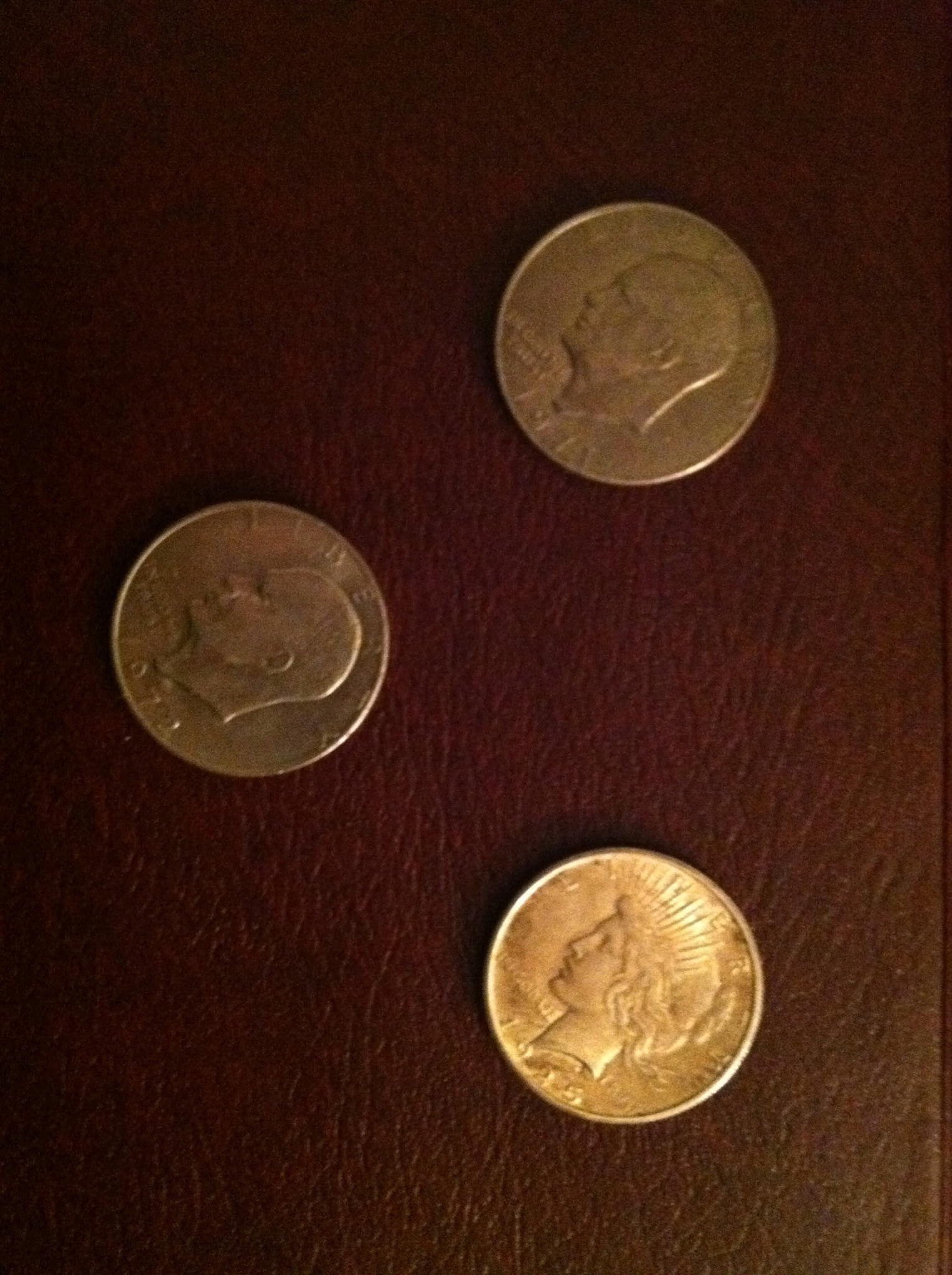 Christmas 1978 wasn’t particularly memorable for me. I do not remember the toys or gifts that that year, save the one present I received from Uncle Shorty. In a tradition between him and me, every year shortly before Christmas morning I would visit his house and give him a “present,” of a tin of cashews. Invariably, on Christmas morning, I would find an empty cashew tin containing some sort of treat.
In 1978, that treat was three silver dollars.
Silver dollars to an eleven year old were pretty special, and in typical eleven year old fashion, I hid them in the same tin under my bed.
The following year, 1979, was a particularly tough one for us. It was just me and Mom, and like most single parent families, she had to cut a lot of expenses just to get from one month to the next. Mom typically spent her days working several jobs and was gone throughout the day and late into the night, so I learned responsibility at a young age. I learned these lessons partly because one of the expenses that fell to the wayside early on was babysitting fees, and mostly because, well, I had no other choice.
Despite Mom’s expense management, spring 1979 was very tough. I can remember short periods where money was tight and Mom was frantic with worry over how she would pay a bill. There came stretches where we were without food for several days between paychecks from Mom’s various employers. Now a parent myself, I can only imagine the worry Mom felt then over how she was going to feed me, keep me decently clothed for school, keep utilities on, and several other worries and fears a parent endures.
During this time, for whatever reason, I came to be playing under my bed as eleven year old boys are prone to do. I happened upon the tin I had placed there on Christmas morning and quickly remembered the three silver dollars.
As I crawled out from under the bed with the tin in my hands, I knew instinctively that I needed to give the silver dollars to Mom so that she could use the money in whatever way she needed to get us through until her next payday. I was torn over giving the money to my mother. Yes, I wanted desperately to help, yet at the same time the thought of giving up my “treasure” from Uncle Shorty sickened me.
In the end, my eleven year old sense of duty prevailed.

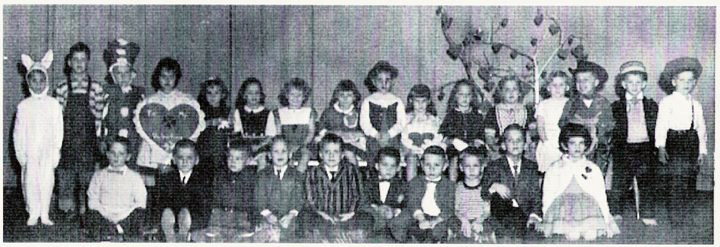
Terry with cousin Kurt
Of course, Mom was ecstatic to discover that I had not spent the silver dollars and immediately went to the store to get us some items to get us by for a few days. I recall a few days diet of milk, potted meat sandwiches and Cheerios. My treasure, as it were, had gotten us through a very rough patch, and lifted Mom’s spirits enough that after this “between paycheck” crisis, she took some steps to ensure I was never that close to going without food again.
Most prevalent on my mind, though, was the heartbreak I felt over surrendering my treasure, even if for the welfare of Mom and myself.
Luckily, the local food mart in the South Hills area where I grew up in was owned and operated by a very friendly man, one who was always telling stories to the local children while negotiating menial chores for candy or small dime store variety toys. His name escapes me after all these years, no doubt removed from the recesses of my brain responsible storing names and replaced with something more import to my early adulthood, such as the lyrics to Bohemian Rhapsody.
The following day I entered this store and approached the store keeper nervously, trying to keep a grown-up face as I related my story and my desire to buy back the silver dollars at a later time. I was delighted to discover that he was well aware of my mother’s purchase and actually had set aside the silver dollars. I’m not sure if it was my sad expression, his generous heart, or perhaps a combination, but he told me I had an opportunity to earn back the silver dollars. All I had to do was sweep the store and the store’s parking lot early every morning before the store opened for a month. At the end of that, he would return the silver dollars to me.
Perhaps he thought this was a fair exchange. A month’s worth of free labor in return for three dollars. Ha! I would have swept his store and parking lot for a year. It was not until years later that I discovered one of the silver dollars in question had a slightly higher value than the other two. I am sure this fact escaped my mother’s attention, but I’m fairly certain the shop keeper would have been aware of this fact.
Flash forward to 2003. Shorty’s 70th birthday party. Sadly, I was unable to attend and was at a loss as to what kind of present to send in my absence. Cashews had lost their luster years prior. I sat down and decided to write the story you are now reading, events that had never been relayed to anyone else in my family as Mom was a very proud and private woman. In the letter, I detailed how three silver dollars had taught me a lesson about life, family, and duty. I also included the three silver dollars.
Reports I received from my cousin suggest that the story and the present were very well received. My cousin read the letter aloud to my uncle at the height of the party, and Shorty was so moved that he described me to other party-goers not privy to the family dynamic as his “second son.”
Needless to say I was moved by this, and felt very much at peace with the silver dollars’ legacy in my life.
A few years after that, we lost Shorty to a long and difficult fight with lung cancer. I was blessed in that my schedule afforded me the opportunity to drive home and visit Shorty in the hospital prior to his passing. Even throughout his sickness, and his incapacitation to a hospital bed, he managed to look so much larger than life. I was amazed, and I told him so. He couldn’t reply, but his eyes passed on to me that he had heard and understood.
As I left his hospital room and went into the ICU’s waiting room to seek solace and comfort with other family members, my aunt approached me and gave me a long embrace. As she pulled away, she pressed a plain unmarked envelope into my hands. She looked into my eyes, “From Shorty.” As I left the hospital and sat in my car, I opened the envelope.
In my hand were my three silver dollars.
You can read more about the 2012 Essays on Childhood writers here.
 Susan Byrum Rountree has been telling stories ever since she understood the power of the Show & Tell stool in kindergarten. Words have always held a sense of magic for her, and she parlayed that magic into a 35-year career of bending them this way and that. She is the author of
 Esse Diem