The Best of the Blog 2010: What Lit Fires and Stirred the Pot

Last year I ranked the “Top 10” Esse Diem posts by the number of comments.  I was still new to blogging and had did not have access to statistics that would allow any other evaluation.  This year, it’s different.  And more interesting.

WordPress provides statistics on the number of visits to the blog each day, and breaks it down by post and page read.  I’ve also started tracking how posts are shared on Facebook and Twitter, as well as keeping mental note of private email messages about posts that people do not necessarily want to comment on in public.  (Those stats are some of the most interesting, to be sure.)

Because there are so many different ways to evaluate a “Best of” list, this summary represents a combination of factors, from raw numbers to shares to gut instinct.  Different groups of people read different things, but the pattern that emerges is one of solidarity around an interest in people just being better to one another.  I could not ask for a more rewarding realization as a writer.

2011 will bring a new award recognition for West Virginians making a difference; another essay series; and a little more about sexuality issues, especially where they intersect with spirituality issues.

In no particular order, here they are.  Thank you for reading Esse Diem, and enjoy the 2010 flashback!

The Top 10 of 2010

What’s Mine is (not) Yours

WordPress has a daily feature called Freshly Pressed.  They term it “the best of bloggers, posts, comments, and words” and I wanted to be that.  After reading the qualities of blogs selected for this coveted status, I determined the one thing I wasn’t doing that I needed to change was to start using more original images and to make sure all other images were credited to their source.  This post kicked off a week of original drawings by my husband for the blog.  It was immediately selected for Freshly Pressed, and garnered 3,000 blog hits.  It also changed how I select and credit images on the blog.

Children of a Lesser god

I wrote this post after a student at Rutgers University killed himself when his roommate and one of the roommate’s friends broadcast the student’s private sexual encounter with another man online.  The suicide and what precipitated it were chilling, but the responses to the events were even more so.  One of the most disturbing pieces of fallout from this post was a lengthy Facebook thread that followed its reposting by an Esse Diem reader who tried to use it to launch a discussion about compassion, especially in his faith community. It was shocking to see the number of “Christian” voices who blamed the victim, and who attributed his death to a failure to exhibit confidence in (a particular interpretation of) God.  I was strongly reminded of Kiefer Sutherland’s character in A Few Good Men:  “Private Santiago is dead, and that is a shame, but he is dead because he had no honor.  He had no code, and God was watching.”  While I didn’t love what I discovered, I think it was important.

Twittiquette

I can handle disagreement; in fact, without healthy debate I start to worry if anyone is paying attention to anything.  What I don’t tolerate is reactionary disrespect.  Twitter has many positive uses, but it can still be used similarly to anonymous online comments by people who see “tweets” and hiding places for their attacks on other people.  This post was my response to one such incident, and it received a large number of shares and hits.  Apparently many people concur:  Twitter should be open for debate, but not for bashing.  The post made the rounds in the Philipines and beyond.  I now have regular polite exchanges with the individual involved in this incident, even though we still don’t tend to agree on much!

The Victory of Every Woman

The popularity of this post surprised me, but it probably shouldn’t have.  The title alone suggests a wide range of relevance.  Women with cancer, strained marriages, and parenting struggles connected and shared their thoughts and emotions about Elizabeth Edwards.  One of the most important honors I’ve ever had is to have this post featured on the home page of a married woman and mother who is fighting cancer with every fiber of her being.

C’mon.  Don’t Be a Hater

This was a popular post, but I chose it for this list because it was the real beginning of something I’d wanted to do for a long time, and that is say, “Enough already with the cowardly crap.”  Cowardly crap is my kindest and best term for when people refuse to identify themselves online but feel free in their anonymity or disconnection from others to attack people.  It goes on all over the world, and is especially rampant on news sites.  I got some pushback from some — surprise, anonymous — bloggers who disagree.  That’s fine.  What I also got was change in online policy comments in my local paper.  The timing was no doubt coincidental, but it was satisfying.  The whole series of events helped me upgrade my own online transparency; it is true that owning our words makes a person more conservative but also discerning in his or her expressions and choices.

Essays on a West Virginia Childhood

This was by far the most fun project on the blog this year.  I learned a lot working with people who spent all or some portion of their childhoods in West Virginia, and I am so grateful to John Warren, Amy Weintraub, and Lisa Minney for sharing their thoughts and memories.  We decided to break up John’s essay into a week-long series, which worked well for a piece that was both serious and complex.  My hope is that this project convinces others that writing need not be long or published traditionally to be shared and valuable.

We still have a few more writers in the queue, so stay tuned!

The Short Ladders

One of my personal favorites, this post is about the perils and pitfalls of extreme opportunity in my home state; I was suprised that the only comments it received on the blog itself were from out-of-state.  I did receive some interesting private correspondence, which I appreciated.  Apparently it struck a chord, just one upon which no one really wants to elaborate publicly.  We might work on that in 2011!

I Want to Be a Shepherd

Regular readers of Esse Diem know I try to work in Good Will Hunting whenever I can.  This post was originally just a quirky musing on an event a friend had with her child.  It turned into one of the most shared and read posts of the year.  The response to the idea that we can do more than be victims or predators in this world, that we can choose to take care of one another, was very special for me.

I think this blog has the coolest readers around.  Thank you again for being part of this work!  See you after the ball drops!

Image credit: Painting in Thailand

Hippies and Filipinos – A Spencer, West Virginia, Childhood in the 1970s

Esse Diem is privileged to share a reflection by Amy Hamric Weintraub as part of the Essays on a West Virginia Childhood project.

A very young Miss Hamric

Amy is one of the most intense and effective community leaders I have ever known.  I have seen her go to the mat for reproductive rights, fair housing, jobs, civil rights, religious freedom, and peace.  She is a devoted wife, mother, and friend, as well as an accomplished professional with a long history of executive leadership in key community nonprofit organizations.  Her essay about growing up in a family with a long West Virginia heritage, while playing and learning among “children of hippie farmers and Filipino doctors,” just charms me.  I am delighted but not at all surprised by her focus on her early experiences with diversity, as those times have clearly helped make her the woman she is today.

Hippies and Filipinos – A Spencer, West Virginia, Childhood in the 1970s

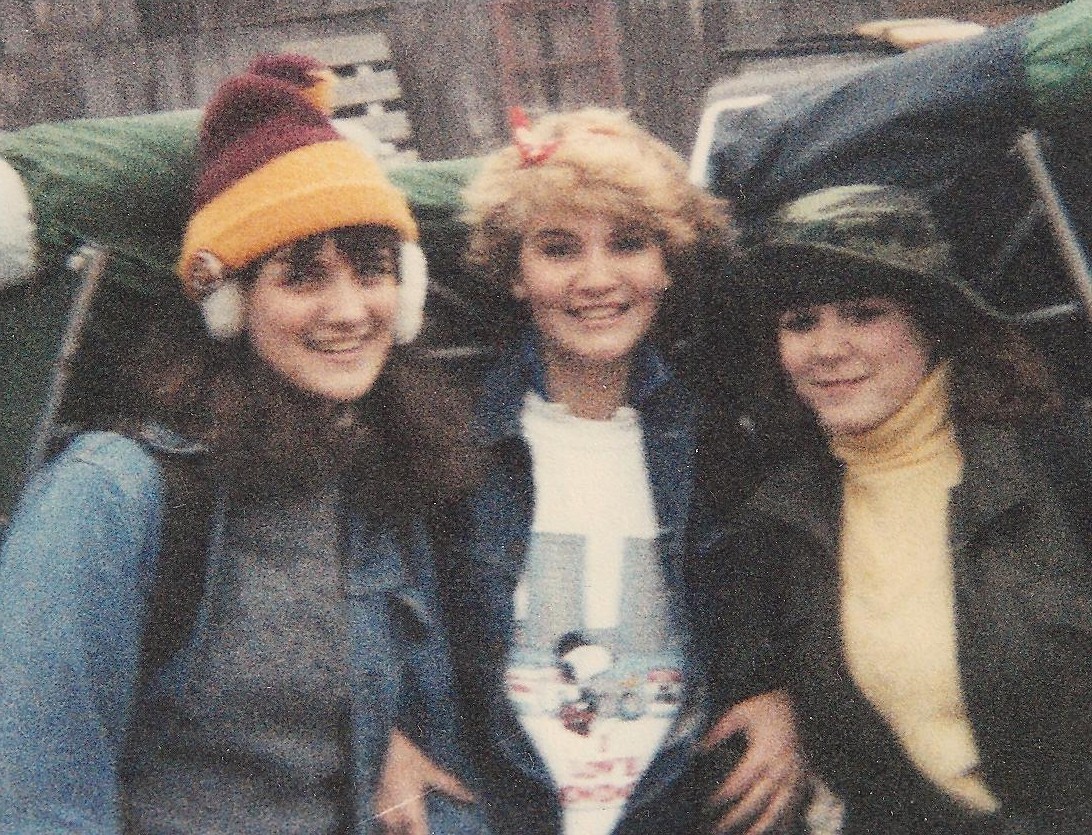
Amy with friends Kelli and Hilary

I was born in Spencer, West Virginia, in 1968; in that year, the town was home to generations of born and bred West Virginians.  Though a few, like my mother (an Oklahoman) had “married in,” most could count their Mountain State ancestry back multiple generations — indeed prior to the Civil War.  Like small towns across America, however, things were a-changin’.

In metropolitan centers in the Northeast, malcontent young people turned away from the professional tracks their parents had planned for them, seeking social change, for their own social order.  Evoking the pioneer spirit of the early 20th century, these adventurers rejected conventional life for something new, land-based, and communal.  Arriving in my rural county in their “wagon trains” of Volkswagens vans, these young urbanites pooled their money to buy or rent farms, taking advantage of the low demand for rural West Virginia property in the early 1970s.  They proceeded to raise crops and animals, make art and love, and in some cases have children.  The locals dubbed them “hippies” — or in polite company, “back-to-landers”.

In this decade, Spencer opened a community hospital and began recruiting medical doctors.  The first doctors to sign contracts at Roane General were finishing their residencies in New York City hospitals — and all hailed from the Philippines.  They landed in Spencer in waves complete with their warm chocolate skin, foreign accents, and in most cases, complete families with children.

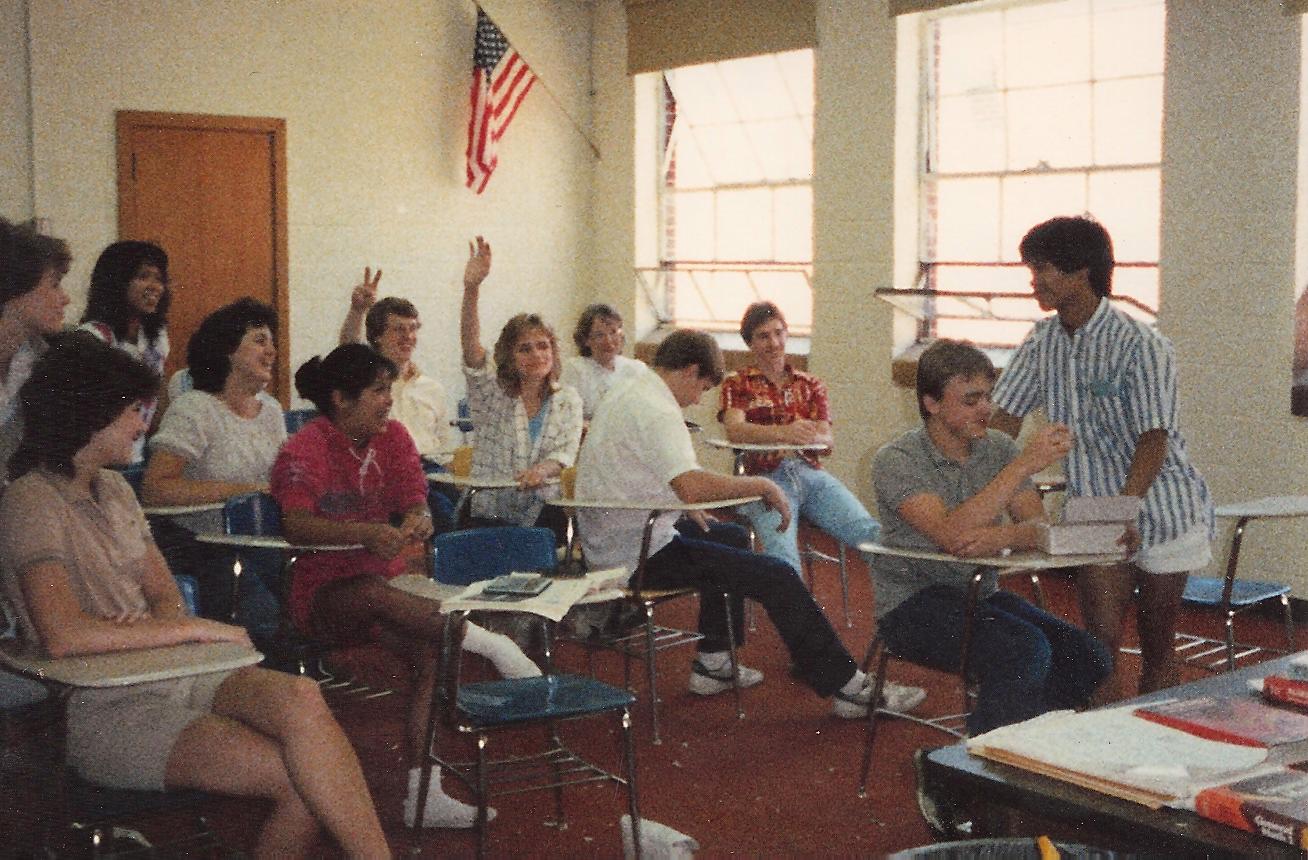
Student Council president Edgar, a Filipino American, leads a meeting at Spencer High School

By the time I started school, my first grade class contained the expected number of “Roane known” names such as Greathouse, Nichols, Casto and Miller.  But one also found Arabia, Fitzpatrick, and Kershner along with Gamponia, Ambrosio, and Lo.

As I reflect on the many ways the presence of these dear souls enriched my life, I return to my own childhood in a vivid wash of memories. 

I see the dust float through the air as I move my tiny feet from first position to second position in ballet class, taught by one long-haired willowy waif, provocatively named Kis Scary, origins unknown (but she was with us for a year!).  I see the bills fly from Dr. Ambrosio’s generous hands as he lets every child at the Black Walnut Festival carnival have a go at the nearly impossible-to-win arcade games.

I feel the relief of my 6-year-old self as dear Dr. Erlinda, originally of Manila, asks all the right, sensitive questions to diagnose my stomach ulcer and gently explains how I can get well.  I feel my lips curl awkwardly as I try to speak the French words taught to a group of us 8-year-olds at the county library by Preston Clark, formerly of Massachusetts.  I feel new passions awaken as I read an issue of Ms. Magazine, found after being set aside unread somewhere in my house by my schoolteacher mother, who had received it from Kaya’s mom — a well-meaning hippie feminist mama.

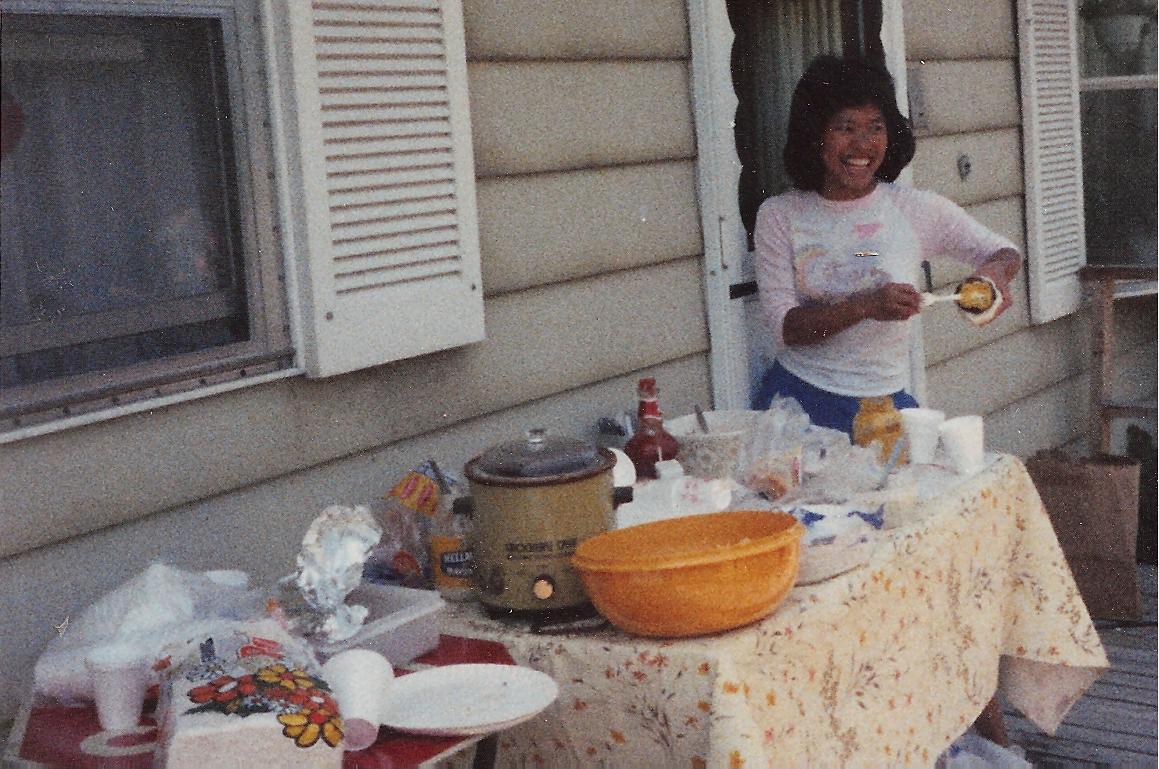
Cecelia, a Filipino American and one of Amy's nearest and dearest at a traditional WV potluck party

I smell the nutty, pungent scent of soybeans as they transform to chunky blocks of tofu at “The Soy Dairy” and smell the fresh, musky scent of herbs and wafting out the open doorway of “The Growing Tree” food co-op.  I smell — oh, how I smell!– the gingery, garlicky deliciousness of “Oriental Steak,” created by Remi Lo – a recipe that forever changed the supper repertoire of housewives throughout Roane County.  I taste the savory, aromatic pleasures of my first real Italian meatball and drink my first sip of red wine at the Arabia family (formerly of Scarsdale, New York) farmhouse. 

I hear the clickety-clackety-clack of the Filipino Mah Jong tiles at Cecilia Ambrosio’s house as we race through the family room, occupied by her parents and grandparents, en route to the kitchen for rice cracker snacks.  I hear stories of Cecilia’s and Rick’s trips to the Philippines and wanderlust fills my heart. 

Oh, the impact these folks had on our community!  Even those who were there a short while brought an expanded world view, varied interests and culture, and a zest for life. 

Sadly, many Spencer back-to-landers were not prepared for the realities of a rural life and returned to city living after a relatively short time, mainly due to relationship problems and/or the financial strains involved with making a living from family farms of modest scale.

A "typical collection" of Amy's BFFs (l to r: Rick, Greg, Hilary and Donovan)

Thankfully, most of my favorites stayed; today the hippies you will meet on Spencer streets are integrated fully into their adopted hometown.  They coupled with life partners who had a comparable level of commitment. They made permanent homes that were comfortable and practical.  They became realistic about their financial needs and found sources of income beyond their farms. Some had flexible occupations, like writing and other creative work, or a trade. Most found steady jobs in the town of Spencer or they commuted to Charleston.  They became school teachers and community arts council members and carpenters and business owners.  Their children filled school art shows and plays and sports teams, and they were raised with us as rural West Virginians.

Amy's best friend, Debbie, who became a bridesmaid at Amy's wedding years after growing up together.

Following a parallel track, the Spencer Filipino families rode a wave of migration via the Immigration and Nationality Act of 1965; the Act allowed for “occupational” migration in response to the need for more American professionals, specifically in the medical field. Thousands of Filipino professionals, mostly doctors and nurses, arrived in the U.S. as complete families, with dozens eventually coming to the town of Spencer.

Spencer Filipinos integrated completely and quickly into West Virginia life.  As our physicians, the parents offered enormous value as a talented and caring community-based medical team.  These doctors and their spouses became leaders in local churches and civic organizations.  They worked tirelessly to build our town’s health-care infrastructure and provided much-needed public health education and information.  Their children filled our school honor rolls and 4-H clubs and homecoming courts as they were raised with us as West Virginia sisters and brothers.

I think often of the ways these childhood friends and their parents influenced the way I see the world and the way I choose to make my way through it.  They helped build my confidence to search out new, sometimes distant places, and to find a way to feel at home anywhere.  They helped form my early love for good food and drink, my love of the sound of different accents, and my constant striving to look beyond skin color or family origin to find the abiding dignity within each soul I meet.   They helped forge my interest in service to community and neighbors and a willingness to take on challenges and risks.

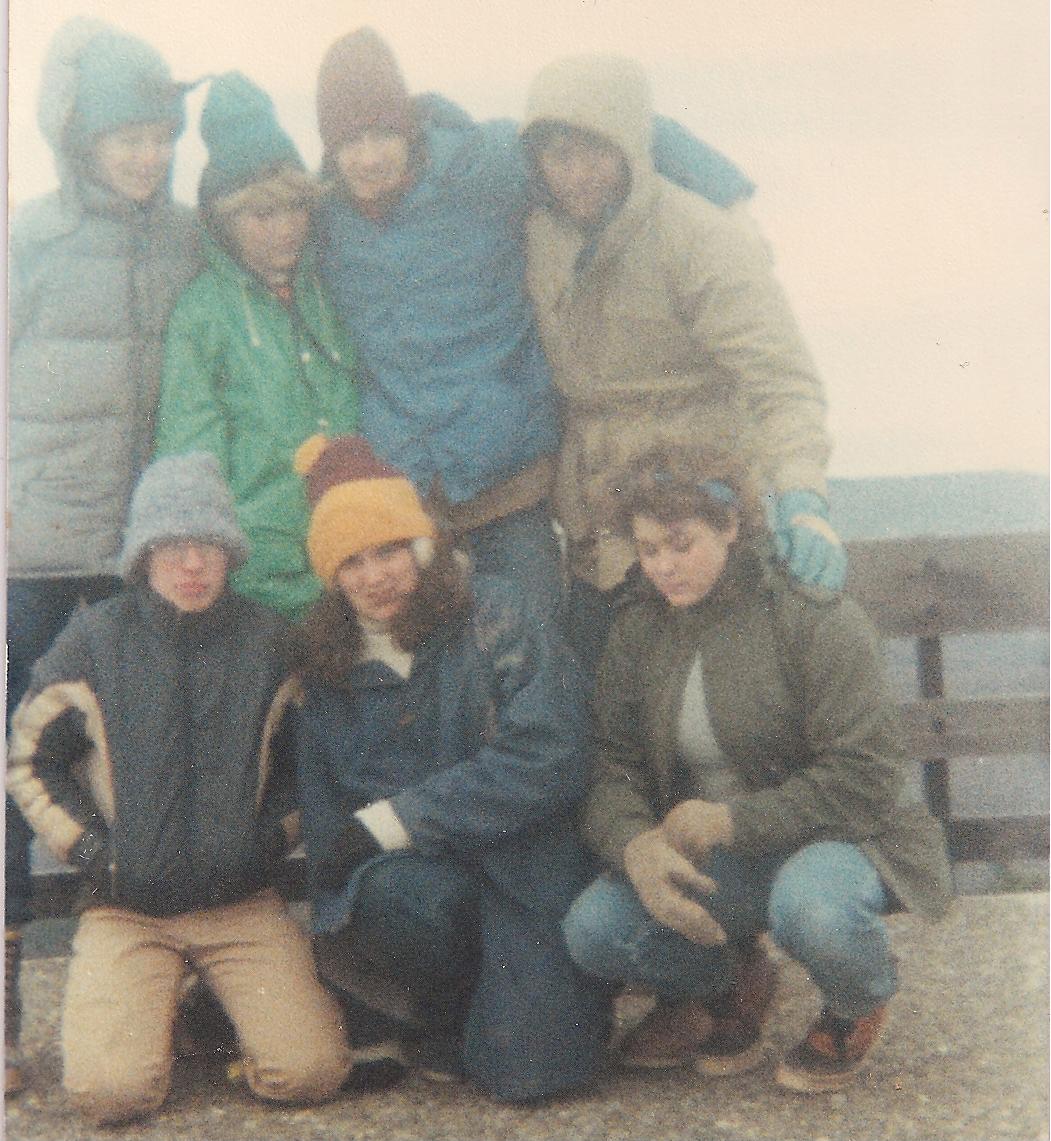
A freezing camping trip to Spruce Knob can't hide the warmth between these friends! (Front row: Ben, Amy and Hilary; Back row: Eric, Kelli, Greg, and Rick)

As we grew up and graduated from dear old Spencer High School (may it rest in peace), these childhood friends and I dispersed around the state and country.  But all of us — the local yokels, the mud-covered hippie children, and those exotic Flips who are late to every meeting and event (running on Filipino time) — still keep in constant contact through the Internet, mail, phone calls, and regular in-person reunions.  We love to reflect on our charmed upbringing in the lovely town of Spencer and to look back on it with rose-colored glasses that we would prefer not to remove, thank you very much.

 And I give thanks on a regular basis that our parents – whether they came from afar or abided in the place of their Mountaineer ancestors – raised us right where they did.

 Debbie, Hilary, Cecilia, Ben, Rick, Donovan:  I adore you, as I always have.

Images credit: Amy Hamric Weintraub