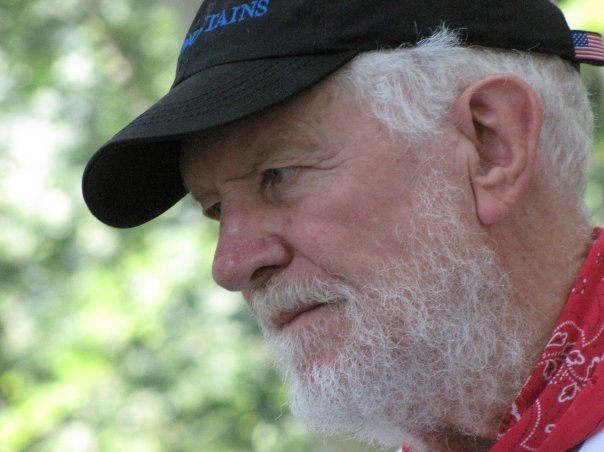
 Julian is the eighth generation of his family born on Big Coal River. He is a graduate of St. Albans High School where he was an all-conference football player. He has a chemical engineering degree from West Virginia University (WVU) and worked two years in the chemical industry. After one month training to make sidewinder missiles,he joined the Peace Corps as West Virginia’s first volunteer and taught chemistry and coached the track team at a secondary school in Nigeria. Since that time, he has also worked in urban outreach, organic farming, environmental education, and conservation. He loves his wife and several children, step-children, grandchildren and step grandchildren and two great grandchildren. Julian’s essay Truman and Me and is a colorful reflection on his growing up experiences on his grandparents’ farm. (He admits though, “I called it Grandma’s house and farm ever since Grandpa threw a rake at me.”)
The title of the essay comes from his special relationship with his Uncle Truman, who though truly his uncle was also only 3 years his senior, and in many ways more like a brother.
I believe that Julian is an exceptionally talented writer, and that he writes in a uniquely Appalachian “voice.” He is not afraid to put into words his life’s encounters with things most people would prefer not to articulate: disappointment, anger, embarrassment, confusion, oh and……well, you’ll see. Let’s just say he gave me a post script of, “You can leave this out if you think it’s best, but 97% of boys have done it and the 3% who say they haven’t are not telling the truth.”
I left it in the essay.
Julian’s writing is by no means all about the things other people don’t want to acknowledge. His adventures with Truman are honest, fun, and entirely real. He lets the uninitiated into the world of real boys, like Huck and Tom, and for the initiated it should be a rollicking and poignant reminder of days past. Days when boys played army, and fought the bad guys instead of doing chores. When they practiced getting erections and weren’t entirely sure why. When they had so much fun they threw up, and when they realized their grandma might just be the strongest person in the family.
Welcome to the world of Julian Martin, friends. It is my privilege to share his essay in 5 parts, with an epilogue.
Enjoy!
Truman and Me
My uncle Truman and I killed millions of German soldiers during the Second World War. One morning before my grandfather Charlie Barker went over the mountain to his job as a laborer at the DuPont plant, he commanded us to hoe the sprouting field corn. I was probably eight or nine years old and Truman was three years older.
To my adult eyes, that corn field is still huge and at our age almost seventy years ago it was daunting.
We hoed as far as the shade of a big sycamore tree halfway down the first row. The ground was sandy from years of flooding which made it easy to dig a foxhole to fight off the Huns. We tossed dirt clod grenades and made appropriate gun noises as we defended our homeland with sticks that felt exactly like guns. Charlie seethed and ranted when he got home and saw our work for the day was a hole in the ground in the first row of corn.
For a while my Grandma and Charlie owned a general store in Ashford, West Virginia, three miles up Big Coal River from the homeplace at Emmons. When I was five years old, Truman and I would run into the store from playing, stick our hands into the loose candy and run like thieves. During one of those escapes Charlie threw a rake at me, at least I thought so at the time. After that I never again called him Grandpa, and the farm was thereafter, “Grandma’s farm.”
Grandma said Truman and I fought like grown men, punching with our fists and rolling around on the floor and under the dining room table. Truman had a three year advantage but he was a little guy, so our fights were usually a draw. We played hard like kids do. We got hungry during one wonderful, uninhibited, wild and joyous day of fighting, wrestling, killing Nazis, running and running. We went in the house several times and scooped out dollops of peanut butter with our fingers. Like horses eating too much corn, I got foundered on the peanut butter overdose. Terrible vomiting ensued and the memory persisted of a thin mixture of stomach acid and peanut butter running out my nose.
It was at least five years before I ate peanut butter again.
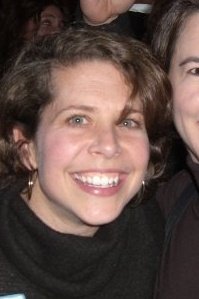 Cathy is an Ohio gal at heart, particularly so after walkabouts in various other, truly fabulous places. She’s taking advantage of this one wild and precious life by trying new things, which includes this first foray into creative writing (so be gentle). In addition to family and friends, Cathy loves her work supporting entrepreneurs and blogs about it on the
  Esse Diem