She can’t remember the last time they met, though it was only three years ago this third of July, a hot, moonless summer night, when she’d spent the final moments holding his hand, alternately speaking to him in hushed tones and singing “Let Me Call You Sweetheart” ever so softly into his ear, her cheek meeting his where it lay on the stiff hospital pillow.
 She can tell you how they met, in vivid technicolor detail; about the pouring rain that day some seventy years ago when her big brother brought him to the house, a drowned rat by all appearances. But even so, she couldn’t take her eyes off of his; they way they twinkled and danced! Just one look, and before she knew it she was following him down the yellow brick road of his dreams, into happily ever after.
She can’t remember the name of the nice lady who fed her lunch yesterday and breakfast this morning; the one who cajoles her into taking “just one more bite”; the one who brings the styrofoam cup of too sweet lemonade to her lips to wash it down; the one who is a mere child herself, but inevitably crows about what a “good girl” she’s been to eat so much of the tepid, pureed gruel that passes for a meal these days.
She will ask you, though, about your babies, and even about Ms. Stinky-son, her great grandson’s not-so-favorite kindergarten teacher. Did “that woman” ever give him back his truck? she’ll ask, recalling an incident long forgotten by the parties involved, a glint in her voice as she stands ready to defend the shaggy haired five year-old with the tear stained face of a decade or more ago, standing in living color before her mind’s eye, in its own twisted version of the here and now.
She can’t remember why she doesn’t see you everyday, or, perhaps more aptly put, that she doesn’t. Where has everybody gone? Why is she in this awful god forsaken place? She hates it here, she says, without saying a word, but still, you can read the indictment on her face. She wants to go home. Can’t you take her there? Sit on the big flagstone back porch and gaze across the river, have a glass of tea and talk about remember when? The pleading that goes unsaid is enough to break a soul in two, jagged edges still piercing and pinching long after the visit is over.
She won’t remember that you’ve been here, almost as quickly as you go. Tomorrow, today will be just yesterday, those short term memories the first attacked by the cruel, unforgiving scourge that wipes the surface of her mind clean each night.
But you’ll remember.
“I have to go, Grandma. I’ll be back soon.”
Her face turns, seeking yours.
“I love you,” you say, nearly choking on the swirl of emotion you feel welling up from the depths of your suddenly fragile heart.
Her cloudy eyes find yours, and lock there in a long, present moment.
“I love you, sweetie,” she states with all the authority of the grandmother you’ve always known. “And don’t you ever forget it.”
Jennifer Waggener says, “I discovered the world of blogging in February of 2004 and have been addicted ever since. I’ve met the most amazing people through this little hobby of mine. The entire journey has proven more rewarding, more time consuming, more thought provoking, more immensely pleasurable than I ever dreamed it would.”
Fade to Black first appeared on Jennifer’s blog on June 27, 2006.
Image credit: Cover art from Twelve Below Zeroby Anthony Bukoski. Painting by Gaylord Schanilec.
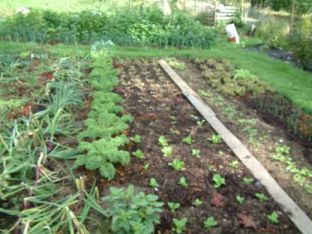 I’d seen gardens; eaten from them before. Neighbors in Rome, Georgia gave us tomatoes, okra, carrots grown in their backyards. The bungalow-style hotel we stayed at when we first arrived in Nicaragua had a banana right outside our front door; our first house, a mango in the patio. In Santo Domingo, an avocado. But these were not gardens to be tended, cared for. Other people did that; or, as in the fruit, it was there for the taking.
 Father loved the food of his childhood and mother didn’t simply oblige him, she lavished him with Bolognese from carrots, celery, garlic, and onions chopped and sautéed with ground beef, then stewed for hours in tomatoes, wine, and herbs. But it wasn’t all Italian all the time. Mother found a way into the cultures of those countries we moved through by learning to cook their food. She knows how to prepare green and ripe papaya, knows how four different countries turn avocado into dip, knows what to do with plantains depending on their ripeness.
 Esse Diem