Most people are aware that “polls” show a truly bizarre number of Americans question whether or not the President of the United States is a citizen of the country he leads. I don’t want to get into the specifics of this current climate of suspicion, i.e. from the partisan angle, but I do have another interest. After reading this Timothy Egan column yesterday, I was left with a question he doesn’t address.
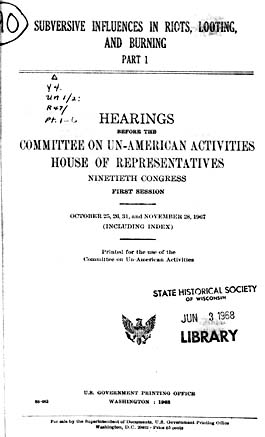
Just a little bit of history repeating....
Why do we do this all the time?
Let’s start with the fact that our county is not very old. By global standards we are still in utero. So we don’t really have the track record as a society and as a people from a national perspective that some countries do; but what we have suggests to me that we are pretty freaky-deaky, haunted-house-lovin’, “what was that sound” kind of scaredy cats on a cyclical basis.
Allow me to elaborate.
Arthur Miller’s seminal play, The Crucible, is still studied in American high schools but apparently is not being particularly well taught. If it were, one has to wonder if we seriously would be seeing columns like Egan’s. Consider:
The Crucible is a dramatization of the Salem witchcraft trials that took place during 1692 and 1693. Miller wrote the play as an allegory to McCarthyism, when the US government blacklisted accused communists. Today it is studied in high schools and universities, because of its status as a revolutionary work of theater and for its allegorical relationship to testimony given before the House committee on Un-American Activities. (EDG note: McCarthy’s activities are often confused with this House Commitee. The McCarthy era and this House Commitee are two distinct historical references with related themes. See links below.)
I remember the way the hair on my body stood up when I learned about the House Committee on Un-American Activities. About who Joe McCarthy was and what happened in the United States only the decade before I was born. I could hardly believe it was real, but today as I live my adult life in 2010 I realize the next generation is going to have the same experience with what is happening right now.
Perhaps the generations just after the Salem witch trials got cold chills, too. It appears, however, that our goose bumps don’t last long. We are very good at refusing to see ourselves doing the same thing over and over again, and of turning away from the obvious.
When we get threatened, we freak out. Full-on, outta your mind, freak out.
As a people, it seems we are perfectly willing to take the very slim chance that we are right in our suspicions, and to risk a phenomenal amount of character “capital” in the process.
In Salem, it was a similar gig. Throw a suspected witch in the lake. If she drowns, she wasn’t a witch. If she floats, she’s a witch. Burn her.
In the play, the character John Proctor is pressed to death. This was the process of placing giant slabs of rock on top of a human being to try to force confession and/or to kill the person. When asked if the allegations against him are true, Proctor says only two words: “More weight.”
This is not a partisan issue. It can’t be. This is an American issue. We must turn the page on this crazy behavior and call it out wherever it crops up. We know we’re prone to it. We have some nasty tendencies, that is obvious. But we are also young, and we have time to grow up into a nation better than this.
No more weight.

 Esse Diem