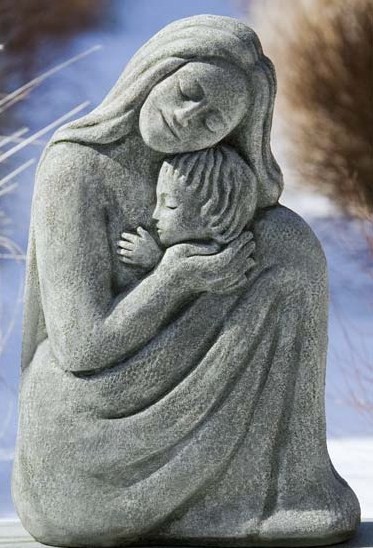
The Privilege of Being Human

This week I was severely in need of a reminder that true happiness is not the asbsence of suffering, but the opportunity to reduce suffering in the world.  My personal belief system is from the Christian tradition, and when I find overlap between my story and interpretations of the human condition from other faiths and philosophies I am always centered by it. 

Salvation, enlightenment, all of the work associated with getting oneself to whatever that point is can sometimes seem like a crushingly difficult process.  Then there are moments of relief, when the weight of the world goes away and only the simplicity of life shows through the murk. 

I hope you enjoy this writing from The Goat Rope.  I connected with the idea that being human, in all of its complications and hardships and beauty, is a privilege we would do well to fully appreciate even in hard times.

(I’m also glad to have the heads up that a love of red wine will keep me from ever attaining certain levels of Buddhist progression….good to know before I get to far down the path to Enlightenment.)

____________________________________________________________

Too optimistic to be happy by Rick Wilson

According to Buddhist tradition, being born as a human is a rare privilege. Other states of being may be more or less pleasant but the human state is said to be the only one in which one can attain enlightenment. It is even rarer and more fortunate to be a human and be exposed however briefly to the Buddha and his teaching.

By those standards, I guess I’m pretty lucky. Due to a traveling grandfather who died before I was born, I don’t remember a time when I didn’t know about Buddha or at least recognize his image, thanks to a statue and a prayer wheel he brought back from China in the 1920s. Learning about Buddhist teachings came later, partially through my study of martial arts.

For the record, I’m not a card-carrying Buddhist but more like a Buddhist sympathizer. Seated meditation drives me nuts and I’m way too fond of wine to sign on to the Fifth Precept. But I’ve been struck over and over again by the practicality of some Buddhist teachings to working for social justice–and not going crazy in the process.

Here’s one to start with: life is suffering. Some people seem to have this magical idea that if only this or that could be made to happen or stopped from happening then everything would be just peachy. If the desired state does not come about, they can make themselves pretty miserable. Paradoxically, they are too optimistic–in the sense of thinking everything can be fixed–to be happy.

Buddhism isn’t pessimistic but it is realistic. Things aren’t all bad all the time but living and suffering are intertwined. Such a view is entirely compatible with happiness, strange as that may seem. We can do things to increase or decrease the amount of suffering in the world but not eliminate it. That insight makes me grateful for little victories and for all the things that aren’t terrible at any given moment.

Here’s a suggestion: try to make it a practice to notice it when you don’t have a toothache.

Art image credit: Garden Fountains

A Few Good Men

Real Stories from the Front Lines of Modern Manhood

Recently I’ve connected with the Good Men Project.  This work is so important, and the people doing it are so good at what they do, it boggles the mind.  One of the best aspects of the effort is that it’s the GOOD Men Project.  Not the Perfect Men.  Not the Simple Men.  Not the Straight Men or the Gay Men, the Married Men or the Black Men.  The Good Men.

There is a lot of space for honesty and diversity in this conversation.

If you don’t know about the project, you owe it to yourself to bookmark the site and especially the blog.  I am just beginning to get into all that is going on with the project, but it was my first foray into the conversation that hooked me.  As fair warning, the rest of this post addresses issues of rape and sexual assault; many of us have experienced the threat of or actual event of such things, and it is important to know in advance whether or not you care to pursue the topic.  I hope you will choose to read on, because as difficult as it is to engage, there are opportunities to learn things and to take actions that can make a positive difference in people’s lives.

What first grabbed my attention was a headline that read “In Yale fraternity pledging, rape is a laughing matter.”  Yale?  I thought this has to be a joke.  Oh no, it’s not a joke.  The pledge class from a certain fraternity marched around campus this fall chanting, “No means yes” and other things not suitable for print here (you can read it on the Good Men Project site).  I thought I might vomit when I read the story, but I pulled it together and read on to the (now) 100 comments. 

This is where it started to get Good.  Really Good.

The Good Men Project is creating space for dialogue about the things no one wants to talk about, but that we desperately need to figure out.  Yes, there is some unavoidable anger in the back-and-forth comments, but the overarching feeling is one of working toward understanding that can lead to change.  One especially moving story from the comments reads like this:

What if your daughter was a rape victim? Would you still tell her to ignore it? I really do see where you’re coming from. I don’t mean disrespect. I want to help you understand what I go through, which is unfortunately common.

I was in a female physiology class with a surprising amount of men (usually women take the large majority, but it was almost half/half). My teacher invited a speaker and had us close our eyes and raise our hands if we agree with the statement.  She started out with statements like, “I would rather walk with a friend during the dark.” A lot of people raised their hands.

Then she proceeded to statements like, “I would not walk alone during the dark ever.” Some hands started coming down from the men. Then she got a little more personal, “I am afraid of being raped.” Then the hands went back up. “I am so afraid of rape, I avoid certain places all together and am limited on a daily basis.”  Then, “I feel that my gender is objectified and disrespected at least twice a day.”

I couldn’t see a male raising his hand anywhere. Some men spoke out saying things like, “I had no idea that this many women felt so much fear and disrespect.” Others said, “It’s hard to believe that women have so much to worry about and that they’re limited because of this worry.”

One young man, said something that really touched me. He said something like, “This is disgusting. It’s disgusting that I was only aware of this 21 years into my life. I think about my sister, my mom, my daughter.  As a man, I have to influence other men.  They need to know women go through this.” I hope that maybe you’ll take something away from realizing the sh*t some people have to go through.

It is said that to know everything is to understand everything.  We can never know everything, but the more we know about each other the closer we can get to understanding why others conduct themselves the way they do.  We can know more about the effect of our words and actions on other people.  We can become more willing to share personal stories that illustrate diverse experiences and we can ask for help and understanding.

There is a lone guy in the comments who goes by “Daddy Files.”  He really takes some serious lumps, and I can’t say he doesn’t deserve it.  But the incredible thing is his willingness to keep coming back into the dialogue, despite the intense opposition to his point of view.  His point of view may not be popular, but he represents a large constituency when it comes to “boys will be boys” philosophy.  His willingness to keep driving the conversation fascinates me, and while I think he’s very confused about the difference between right and wrong, I also think the Good Men Project community owes him a debt of thanks for not letting a very tough issue sail off into the sunset entirely unresolved.

Let’s keep talking.

___________

When you visit the Good Men Project website, you can also find them on Facebook and Twitter.  Image credit:  The Good Men Project