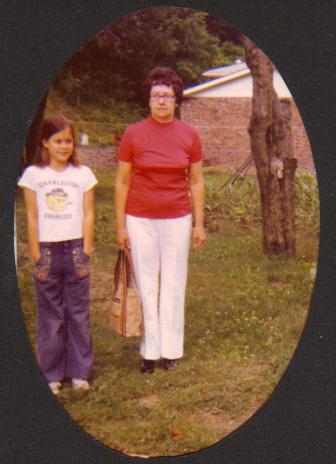
 Cathy is an Ohio gal at heart, particularly so after walkabouts in various other, truly fabulous places. She’s taking advantage of this one wild and precious life by trying new things, which includes this first foray into creative writing (so be gentle). In addition to family and friends, Cathy loves her work supporting entrepreneurs and blogs about it on the Idea Exchange, the blog for Jump Start. Jump Start is a nationally recognized nonprofit organization transforming the economic impact of entrepreneurial ventures and the ecosystems supporting their growth.
Cathy is also one of my dearest friends. She won’t put this in her own bio, but she is a brilliant business person with an M.B.A. from Duke University. (The Duke thing nearly killed me, but I have gotten over it.) She is exceptionally funny and passionate, and a woman who likes to get down to brass tacks like no one I’ve ever known. She loves a challenge, and her essay is an exercise in articulating some family trip experiences that were, well, a trip. She and I have talked about how several of these episodes could become their own essays, each is so rich with sights and smells, fears and joys, characters and places. Her essay reflects the rich mining territory of childhood memories. One day I hope to convince her to write about the horses running off as its own story…..but that will have to wait. She’s got a few hundred entrepreneurs to support!
Zip, Clank, Damp, Bite: Love in the Time of Twine and Bears
It began the same way every time: the somewhat unpleasant scent my sister and I called “trip”, a combination of stale, polyurethane-infused car air and the damp, musky greenness of a dewy morning. Our eyes were small, swollen slits, and our chubby bodies moved slowly, but our brains scurried to awareness with that scent. There were other signals that another summer trip was about to begin: the hard-boiled eggs and glazed donuts sitting on the kitchen table, the locked windows holding in the summer humidity, and the tense voices of my parents as they looked for the travelers checks that “I know are around here somewhere….”
It wasn’t until we walked outside in the pre-dawn morning, opened the creaky car door, and were hit with the smell of “trip” that the next journey was really starting.
My parents, both being teachers, had the luxury of time off in the summer, and with impatient hearts and a love of the outdoors, they took advantage of it. My home in July and August was not our modest colonial in Ohio, but the backseat of the two-door midnight green 1974 Dodge that took us and our camping gear to the great national parks in Utah, Wyoming and Montana, the Canadian Rockies and maritime provinces, and the Capes (Hatteras and Cod), among others. Home was also the various accoutrements of outdoor living, alive in my memory as sights, sounds, and feelings. The sound of an unzipping to allow escape from the tent, starting in one octave and reaching the next, as it curled up the zipper’s metal teeth from my shoes to my hair. The clanking of the old suitcase of silverware, each bent knife with its own slot in the top half of the suitcase, with the remaining pieces jumbled in the bottom with the plastic plates and cups. The damp feeling of my heavy cloth sleeping bag. Even in my own skin, there was evidence of my summer home through the itchy mosquito bites and unpainted nails of a life lived outdoors.
We would be gone for four or six weeks at a time, winding our way across the country at 60 miles per hour. We didn’t see every giant ball of twine, but we saw a lot of them, and always stopped for any historically significant sites. Starting from Ohio, we often headed westward on a path well-travelled in our country; perhaps we felt a wayward kinship with the restlessness of settlers or explorers, or anyone seeking something different, better, or unexpected. There were always secrets and mysterious places, and while we were never in any one location long enough to unravel them, we pursued feeling those secrets around us, that mixture of discomfort and awe and provocation.
I think we were living the uniquely American and ambitious value of searching; always believing there was something to find, something different to see, something new to experience, without really caring what it was.
As with many travels, and generally with life and your home, there are all kinds of moments, and it’s in these moments that my sister and I walked away with our life lessons. There were long, dusty hours in the back seat of the hot Dodge, where patience came as slowly as the car with a license plate we had yet to cross off the list in our games. There was the deep, pleasant sound of my mother reading The Good Earth out loud, either in the car, or at the picnic table over the buzz of the lantern and the symphony of crickets and frogs; with this, I learned the comfort and distraction of a good story. There were always the routines, such as washing the plates and utensils from the meal, with me gathering, my mom washing, and my sister drying, all in a quiet row. As if we were in our house, these activities were the basis of our family, the stability that anchored us no matter where we happened to be. I am very lucky; my home was my family, and the activities completed each day met our needs and enabled everything else to happen around them, as smooth as stones. This is why I still appreciate dull routines as much as the flashes of excitement around them.
I remember as well the adventures. Perhaps, panic and adrenaline imprint themselves in our brains more vividly than mild routine. Once we were stranded at the bottom of a canyon, our horses having run away, I walked away on my own two feet, a witness to resourcefulness and optimism as well as self-interest. The night the bear ate our food as I lay trembling in my sleeping bag inside our tent, I learned how you can both laugh and cry at the exact same time. My fear was lightened by my dad putting on his shoes, not to go out and wrestle the bear, but to keep his feet warm.
Oh, and the time I threw up raspberries all night long after a delicious hour of eating right off the bush, or when my eyeballs swelled up in the middle of a long hike from accidentally rubbing lotion in them? Well, those are just plain funny.
Most of all, I learned that home, that my family, was defined by interdependence as strong as iron. The whole point of the trips – of the pursuit of the next thing, of the eyeball swelling adventures, and of the dull balls of twine — was to experience them together.
It’s the shared memories that we sought, and clearly we got them in spades.
 Esse Diem