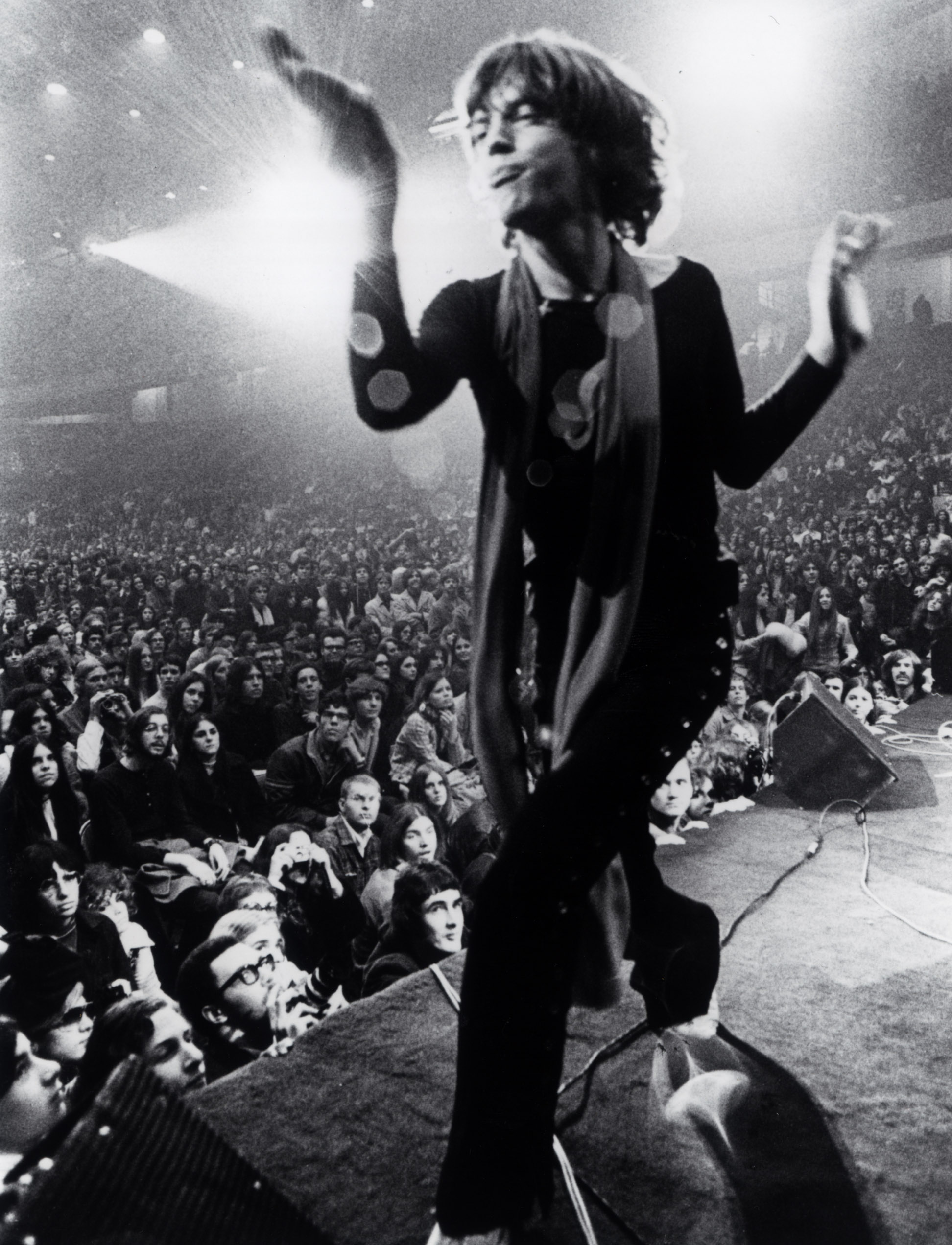
 This post is a different flavor from my usual writing. I wrote it as a submission for a wonderful blog called Monkey Goggles. The site is excellent and besides that, it’s just pure fun. One of my favorite posts on MG was the first one I ever read, and apparently it hits on all cylinders with a lot of people. It is titled Mick Jagger’s Adventures is Toyland and is the 2nd most popular post of all time on Monkey Goggles.
Alas, my beloved MG went dormant at the end of 2010 and I never had the chance to submit my story. I offer it to you here for your entertainment. Consider it a humorous and slightly deranged take on Essays on Childhood. Enjoy!
Rise of The Worm Wand: A Cautionary Tale
My sister and I are not quite three years apart, and we frequently are confused for one another by people who don’t know us well. They say we look alike, but when pressed they can’t defend that. She has blue eyes, I don’t; I’m a couple of inches taller; she dresses well, I don’t; she has never bitten her nails and I chew mine like gum. Even now that I have brown hair and she has blonde people say, “You are so much alike!” What they perceive, I suspect, is that we are both hard-wired products of 1970s children’s television.
Allow me to elaborate.
 We grew up with Sesame Street and Shazam, Isis and The Land of the Lost. (Don’t even get me started on Lidsville.) We believed things, strange things, things that shaped the women we grew up to be. We believed deep down that we were one bad accident away from becoming bionic – ripping phone books in half to get respect from a classroom of rowdy high school students, or leaping flat-footed to the roof of a building downtown. A natural consequence of this belief is that we got a little cocky where perhaps it was not warranted; I think that still shows through sometimes and contributes to our perceived similarities. That and a penchant for speaking in Muppet voices and waving our arms around like Kermit the Frog.
 Both my sister and I developed chants and rituals directly tied to our widely underappreciated magical powers. The adult take on a lot of it now would track to early obsessive compulsive disorder, but I really don’t think it was that. I’m pretty sure it was primarily magic-related. I mean, come on, if Isis could spin a certain number of times and hold her hands just right and say the right words, she could fly. It made perfect sense to make sure I did things an even numbers of times — with the most magical power derived from factors of 8 — and conducted with my right hand or foot. It was all about generating protective powers against breaking my mother’s back. All good kids were doing that, right?
I know. Don’t tell me. I don’t really want my peculiarity confirmed. It’s too late.
My sister took her fashion cues from Charlie’s Angels, and as an elementary student could rock a silk scarf better than Kate Jackson. She also worshipped Mary Hart from Entertainment Tonight and envisioned taking over Mary’s empire one day. I can’t explain why I never picked up on the comprehensive effort at good appearance that my sister did, but I want to blame it on a Barbie manikin head a friend of mine had. I developed a conviction that if you just did your hair and makeup as if your body didn’t exist it was all good. I’m finding out that’s not really so, but I’m too set in my ways to change much now.
 Our early friendships had that Scooby Doo composition of mixed genders, smart kids, goof balls, pretty ones and jocks. Though no one actually dubbed their vehicle The Mystery Machine, I distinctly remember one we called Super Pickle. My sister’s friends were prone to poking around in places where they could be perceived as “those meddling kids.” The Scooby Doo gang was just a highly evolved Breakfast Club, well ahead of its time. Mr. Potato Head had a strange late-breaking impact in our teen years, when I kicked my sister out of my room so I could read in peace and she retaliated by lobbing an Idaho baker stuck with a lighted sparkler into my room like a grenade. I told her well done, but she missed an opportunity for real genius when it wasn’t followed immediately by a handful of French fries as fall out.
I am fairly certain that this potato explosive event was the intersection of the magical thinking of very young children with the warped power-games of adolescence that gave rise to The Worm Wand.
 I want to tell you that I remember exactly how this oddment came into being, but I don’t. All it was, physically, was the remnants of a checkbook register. Every check and deposit slip was torn out, and all that remained was a rectangle of cardboard edged with a thicker binding where all of the paper once was attached. Something about the binding of the register edge made it pliable yet stable. I made it into a hook-like finger and strangely, it acquired a power.
What could it do? The one thing I needed it to do. It could control my sister.
Obviously even then it was a game. She would start to get on my nerves and I would reach into my purse and pull out The Worm Wand and utter, “Silence! The Worm Wand commands you to stop pestering me!” And she did, laughing hilariously the whole time, but she did. It had a snowball effect. Each time she obeyed the commands of The Worm Wand, its power seemed to grow. “The Worm Wand commands you to change the channel. The Worm Wand commands you to give your sister the last bag of chips. The Worm Wands overrides your shot-gun call.” I could get anything I wanted just by having the wand make an appearance and make it so.
In hindsight, only someone drunk with power would not have seen the inevitable coup that was brewing. But drunk I was, and I got lazy. One day my sister and I were sitting on the couch and she casually asked, “Hey, where’s The Worm Wand?” Like a fool, I replied, “I think it’s upstairs in my room.”
I never dreamed she could move that fast.
She was up and off the couch as if she could fly. My split-second hesitation was my undoing. She was up the stairs three at a time and I tripped trying to keep up with her. She disappeared for a moment, and as I flopped onto the landing I looked up to see my triumphant former servant wielding The Worm Wand over my head and screaming, “Ah ha! Now you will pay!”
We both were laughing so hard we could not breathe. I honestly thought I might expire on that landing from my convulsions and inability to respirate.
My sister and I have debriefed over The Worm Wand and its bizarre dynamic for decades now. The whole thing achieved the status of one of the weirdest and funniest episodes from our childhood, and that is no small feat. We did some very crazy stuff.
 The Worm Wand was entertaining, but it also scared us, and in later years I found out why. Most people have an innate tendency to submit to authority. That trait is no doubt there to keep us safe in most instances. What The Worm Wand episode taught me was how arbitrary and nonsensical it can be, and how dangerous. It was just a game, and it was very funny, but the scary part was to actually feel a random object gaining some influence over another person, and to feel that influence gaining a personality and life of its own. Most of us don’t believe we are this vulnerable. The value of The Worm Wand episode for me was the purity of the psychological experiment. We didn’t set out to do anything, or to prove or debunk any theories. We were just kids in our own little Lord of the Flies; yet we were old enough to feel unhinged by the experience.
I still think about ole TWW. What triggers it can be as heavy as a news reference to the Nazi movement or as light was someone asking me to get in line. The words “you can’t” or “you have to” never fall lightly on these ears. Sometimes when the light is just right and I squint my eyes, the speaker gains the form of a hooked finger.
Or a checkbook register. It’s hard to say.
Image credits: Google (various uncredited sources) and Linkbuilderz.com



 Esse Diem