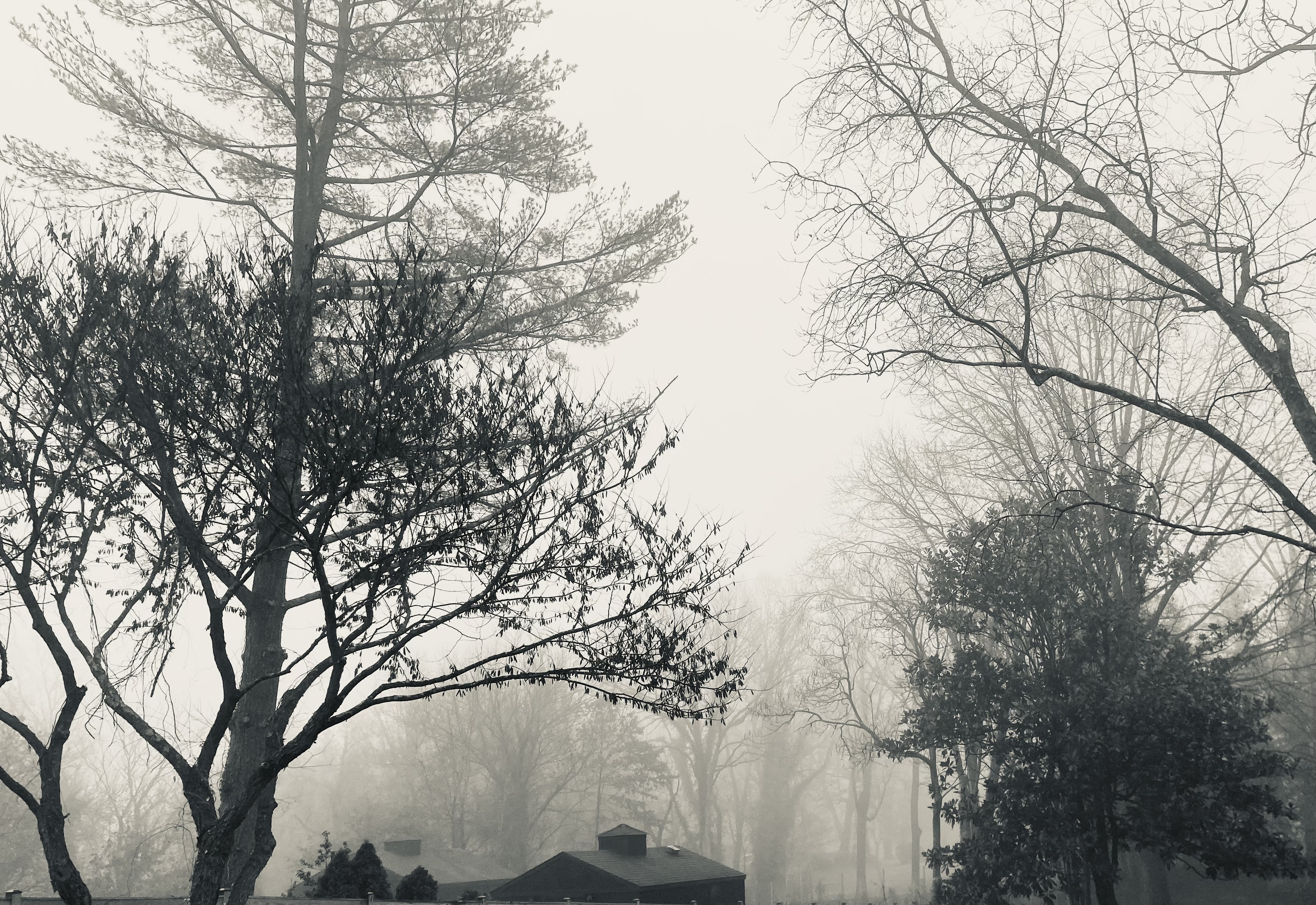
Esse-a-Go-Go: The Regret Story

Regret: to think of with a sense of loss.

The above definition is how an online dictionary defines “regret,” but when I think about my own definition and took a quick poll, that doesn’t even come close.

Today’s story is about the one thing to date that I can’t shake as a personal regret. That doesn’t mean don’t I wish I’d done some things differently in the moment, it simply means this event is the only thing that lands squarely in how I define, “regret.”  That said, I honestly wasn’t sure how to define it in words but merely in emotion until I read this from a friend of mine yesterday and realized, that’s it, or as close as I’ve ever been able to come to it.

“A regret is something you did or said when you KNEW you shouldn’t do or say it at the time & you bullheadedly went ahead & did it anyway & have since seen the anguish it caused someone else or yourself. If you really did or said what you believed to be best & it just didn’t turn out well, I don’t think that is regret-worthy.”

This is not a happy story, but it is one that has haunted me for 3 decades. Perhaps ultimately that is my definition of regret, an unabated haunting.

**********************************************************************************************

Having regrets is a hobby for some people. I never cease to be amazed by the number of people I know or encounter who want to have lengthy conversations about things they’ve done they wished they hadn’t — or vice versa — and all of the attending angst.  I’d say I saw the greatest lumping together of American women’s most popular woes on a recent Good Housekeeping cover, something along the lines of “Valerie Bertinelli shares her weight struggles, what she learned from her failed marriage, and her biggest regret.”

How uplifting.

Suffice it to say, I am done with guilt and regret. I actually gave up guilt as a practice many years ago, and have never looked back. It became obviously self-important, neurotic, and useless. It simply had to go.

Regret has been a harder nut to crack. If I am honest, I do have a handful of things I wish I’d done differently in my life, but when push comes to shove I can’t say I would really want things to be other than what they are now. There is only one thing, one thing only that I truly regret.  I’ve only ever told my husband this story, and now I’m going to unburden myself to you, dear reader. My hope is that by telling this story I might make things different for someone else.  It is much too late to make things different for Alice.

Alice was a beautiful young girl at Camp Virgil Tate where I was a counselor for 4-H Kanawha County Camp one summer in the mid-1980s.  She and her brother were both campers that week, and even back then I recognized in them a fragility under their good looks and strong sibling bond.  Knowing what I know now about what so many kids experience growing up, I shudder to think what they might have left at home to come to county camp.

Alice’s demeanor was one of someone who had been beaten and psychologically abused. Because I was not much older than she was, and because at that point in my own life I had never encountered such a terrible reality, I didn’t understand her behavior. She was needy, and shy, and desperately wanted to be liked, but she did weird things. She clung to her brother when other kids wanted her to socialize with them, and though she was in her early teens (I think), she carried a baby doll everywhere she went. She slept with the doll, changed the doll’s clothes, even introduced the doll as her friend.

I was in charge of the cabin where Alice and a group of other girls were housed for a week that June. I knew the other girls were snickering about Alice’s insecurity and rolling their eyes over the baby doll, but I didn’t think there was trouble brewing.

I was wrong.

One morning I heard peals of laughter coming from the community bathroom.  ”Come in here, Elizabeth, you have to see this. Oh my God, this is hilarious!”  A lot of pranks at camp were funny and good-natured, in fact I would say all of the ones I ever saw were that way, with the exception of this one.

I can still see it. My heart is pounding right now as I write this, and I feel sick to my stomach.

I walked into to bathroom to see Alice standing alone, crying, with a circle of girls around her laughing. She was trying to reach something, and the others would not help her. The others had hanged her baby doll naked from a shower curtain. Hanged as in noose around her neck, hanged. They tortured and killed the only friend Alice had at camp with the exception of her brother, and then they laughed in her face as she cried for help.

I remember being frozen. It was one of those terrible moments when your mind and your body refuse to connect. It felt like an eternity before I could move or speak. I told everyone but Alice to get out. I reached up to save the doll, and then put it in her arms. I think I told her I was sorry that  happened, but I don’t know that I did. My memory is that I wanted the whole thing to go away as quickly as possible.

I believe the one safe place that child had that summer was violated, and that I could have done more to prevent it from happening. I could have done more to reprimand the girls who did this awful thing. I could have done more to comfort Alice, but I didn’t. I moved on. I wanted it to never have happened, and I acted like it never did.

Without going into the weeds, I’m a middle-aged person, and I’ve dropped the ball a few times in my life. I don’t care who you are, if you live long enough and are honest with yourself, you know you’ve done or not done things that might count as regrets. After all these years, the way I failed Alice is the only thing I define as a regret in my life. Because that bar is so high — or low — I have never been able to define anything else as a regret.

I knew she needed a friend, someone who would do more than just take the doll down. I knew those other girls needed to be held accountable for what they did. I analyze this now because when I read about all of the bullying episodes nationwide, there is this same theme. Others are there, others are aware, but they do not get involved at any meaningful level. Why? My experience suggests that one reason may be that when you actually witness this kind of psychological violence against another person, it is truly frightening. I think if you have never seen it in action, it is hard to understand its power. It isolates and harms the direct victim, and it paralyzes the witness (often) with a cloud of desperation to make it stop. Talking about it seems to keep it alive.

Of course that’s just how it seems. How it is is that not talking about it keeps it alive. It would be convenient to say, “I know that now,” but I knew that then. I didn’t do what I should have done, and what I knew was required.

I don’t know why this event out of hundreds of life events haunts me the way it does. If there is an afterlife, my vision is that I will encounter a healed and whole Alice, and that she will forgive me.

Image credit: Daniel Ware

Esse-a-Go-Go: The Celebrity Kroger Story

In my town, it has a special name. It is not just the grocery story. It is not simply Kroger’s Food and Drug.  It is….drumroll, please……Celebrity Kroger of Ashton Place.  (You can check into it on Facebook by that name, so you know it’s real.)

I learned of the true name of this community hub when I moved back to Charleston, West Virginia, a decade ago. This is my home town, and I pride myself on being in the know. I realized in short order I was about as far out of the know as you can get my first weekend home.  I wanted to go out for a beer, and it never crossed my mind to go downtown.  I ended up in a strip mall where I saw a bartender open a Corona and then attempt to put the top back on and put it back in the cooler. I hadn’t gotten the news that my little town was all grown up. I laugh now picturing myself in that yucky dive when I could have been downtown at one of many lovely new hangouts that had blossomed since my departure.

Among the swanky new places to see and be seen was, apparently, the grocery story. I learned in short order that there was only one grocery in Charleston where you could see Jennifer Garner and Ben Affleck, the governor, Rockefellers, members of the legislature, coal barons’ wives and kids, school supers and fashion models.

Aside: If you really want to have some fun, dab on some Giorgio Beverly Hills cologne, do a chignon with your hair, wear high heels and fake fur and sport some Jackie O sunglasses from Target. Speed through Kroger like you are late for a Botox and watch the heads turn. This would not get a second glance in any major city (OK, you’d get called out for the stinky cologne), but you can cause a riot in Celebrity Kroger because YOU MIGHT BE SOMEONE.

In reality, there is only one SOMEONE I ever wanted to see at Celebrity Kroger of Ashton Place.  His name is Mr. Lamanca.

At this point, I would appreciate if you would play the following video as soundtrack softy in the background for the remainder of my story.

For a full 10 years at least, Mr. Lamanca was like Keyser Söze  to me, only cooler. I could not be in Kroger’s without someone coming on the intercom and paging, “Mr. Lamanca, Mr. Lamanca….please call line 2.” The name sounds great on the intercom, and it’s so clear that the man is Lord God King of Celebrity Kroger. Part of his glory is that he seems invisible. He rules all, yet from afar. No one else ever is mentioned on the intercom.

Who was this “Mr. Lamanca”? Was he real, or a hoax? Where was he, and how did he so effortlessly command the mothership from an undisclosed location?

Then one day, it happened.

I was walking through some aisle, I can’t remember which, when I looked up and there he was.

Joe Lamanca, third from left.

I just thought I would be asking a regular store employee how to find an item, and when I looked up I saw a name tag with the name, “Mr. Lamanca.”

I think I forgot how to breathe.

He said, “Hi, can I help you?”

I couldn’t speak. I kept staring from his shirt to his face and back again. I must have looked like an crazy person. He asked if he could help me again, this time with a little look of concern.

“I am so sorry,” I gasped. “It’s just that, you’re….do you know who you are? You’re….(I whispered it) Mr. Lamanca.”

He laughed, “Yes, yes I am.”

“I’ve wanted to meet you for years. I’m sorry if I’m freaking you out, you are just such a mystery, and this is really exciting. I am so happy to meet you! I love your store!” There was more, but I think you get the idea. I did everything except propose. It was hilarious, and I still hardly can believe it happened.

So all y’all who consider yourself all that and a bag of King Size Ruffles, Mr. Lamanca just took you to school. He IS Joe Quixote, the LORD of Lamanca, and though I’ve seen a few “celebrities” at Kroger over the  years, they pale in comparison.

Next goal: Find a way to be allowed to page him over the intercom. Just once.

Do you think that’s too much? ;)

Esse-a-Go-Go: The Post Office Story

When I buy stamps, I always ask for “the writer stamps.” It’s usually a pretty simple request. I ask for the writer stamp du jour, the clerk provides it, I buy it, the end.

On a recent trip to the main office of the U.S. Postal Service here in my hometown, I encountered something different. I’m still not sure what it was, but this is what happened.

The waiting line was long, long enough to engender awkward silences between me and the people standing next to me. We’d start some small talk with the assumption that we wouldn’t be standing there long, and then five minutes later when we were still standing there it was uncomfortable. Every incremental push forward in our line was one breath closer to social relief.

At the window, I made my standard request for the writer stamps. The clerk looked in the drawer and shrugged, “I don’t see any.”

“That’s OK,” I said, wary of upsetting the waiters behind me. “I’ll just take…..”

“Let me go look in the back,” he said.

Well, that’s right nice of you. Hurry back.

Except he didn’t hurry back. He was gone a long time. The people behind me starting pawing the earth. I glanced back repeatedly, smiling weakly and suggesting that I had no idea what the clerk was doing or why.

When he finally reappeared, he had stamps in hand but they were clutched to his chest so I couldn’t see what the images were.  He looked and me and said, “OK, I found some stamps. We do have some.”

What’s the drama?

“First, I want to show you these,” he said. “These are so beautiful and they are some of my personal favorites.”

He showed me a very pretty stamp from the American Treasures series. It was an Edward Hopper painting of a sail boat.

“Now I also have these,” he said.  He revealed the second stamp, a Black Heritage series stamp of John H. Johnson (1918-2005).  I realized to my dismay that the clerk was afraid.

He was afraid to show me a stamp of a black man.

What did he think, that when I said writer I really meant sailboat? That I don’t think African-Americans are writers? That girls only like purty things with pastels and sunshine? That I would call his supervisor for daring to try to sell me a Black Heritage stamp when I’m white and I said I wanted a writer stamp so surely I must have meant a white writer?

The truly strange thing is that to this day as I write this, I’m still not angry with this clerk. He went out of his way to help me. He did what I asked him to do. What stays with me is that he assumed I didn’t want this stamp.  What he did was make me want this stamp even more, and make me want you to want it, too.

Forever stamps are always equal in value to the current First-Class Mail one-ounce rate.

This man was incredible, and I never knew his name before my Post Office story. Thank you, strange clerk. You helped me more than you know.

John Johnson. Forever.

(Right about now, I wonder what’s happening at Karan-a-Go-Go…….)

In 2012, the Postal Service® is pleased to honor John H. Johnson, the trailblazing publisher of Ebony, Jet, and other magazines. Johnson overcame poverty and racism to build a business empire embracing magazines, radio stations, cosmetics, and more. His magazines portrayed black people positively at a time when such representation was rare, and played an important role in the civil rights movement.

His unwillingness to accept defeat was a key to Johnson’s success. When he was unable to buy a lot in downtown Chicago because of his skin color, he hired a white lawyer who bought the land in trust. Thus, Johnson became the first black person to build a major building in Chicago’s Loop, where Johnson Publishing still has its headquarters.

As Johnson’s influence, accomplishments, and fortune grew, he received many prizes and honors. He joined Vice President Richard Nixon on a goodwill tour of Africa and served as a Special United States Ambassador for Presidents Kennedy and Johnson. The National Association for the Advancement of Colored People (NAACP) awarded him its prestigious Spingarn Medal in 1966. Six years later, in 1972, his industry peers named him publisher of the year — a prize Johnson compared to winning an Oscar. In presenting Johnson with the Presidential Medal of Freedom in 1996, President Bill Clinton lauded him for giving hope to African-Americans during difficult times. A panel of experts polled by Baylor University in 2003 named Johnson “the greatest minority entrepreneur in American history.” That same year, Howard University named its journalism school after him.

The John H. Johnson (Forever®) stamp, designed by Postal Service art director Howard Paine, features a color photograph of Johnson taken by Bachrach Studios. The photographer was David McCann.

The U.S. Postal Service has recognized the achievements of prominent African-Americans through the Black Heritage series since 1978. This stamp honoring Johnson is the 35th stamp in that series, which highlights outstanding individuals who helped shape American culture.

The stamp is being issued as a Forever stamp. Forever stamps are always equal in value to the current First-Class Mail one-ounce rate.

2 Women. 1 Town. 10 Stories.

If you love to write, then you know how it goes.

One day you’re writing, drinking French wine and smoking imported tobacco in a garret, showering the village with sheets of your glorious thoughts and tales.

The next thing you know, Old Jed’s a Millionaire is about the most brilliant thing you can think of and you find yourself hiding from your own blog and taking pictures around town of things like this:

What to do….what to do….you love to write. You love your blog. You need inspiration.

I say try what my friend Karan and I just did. Go to lunch, talk about everything under the sun, maybe even talk about writing, but don’t over-analyze it.  Then drive home from lunch while the sun shines, listen to some music, blur the mind’s eye and – ta da! Receive a gift of energy and inspiration.

Karan and I both cherish writing, and we both find ourselves thinking and talking about writing a whole lot more than we are actually WRITING.

So here’s the deal: Starting on Monday, we will trade stories about life in Charleston, West Virginia. Our writing prompts to ourselves will be simply our experiences around town. Those experiences may be sad, happy, funny, enraging, or anything at all.  What they have to have in common is that they are real.  One of us will post, then punt to the other writer. We will share each other’s stories with our networks and encourage your thoughts on our posts.

We are going to tell you some real stories, and we hope you will come along for the ride.  We call it Esse-a-Go-Go.

Are you ready?

Let’s go!

“Building a Palace”

Reblogged from Writing Sisters:

“Imagine yourself as a living house. God comes in to rebuild that house. At first, perhaps, you can understand what He is doing. He is getting the drains right and stopping the leaks in the roof and so on; you knew that those jobs needed doing and so you are not surprised. But presently He starts knocking the house about in a way that hurts abominably and does not seem to make any sense. What on earth is He up to? The explanation is that He is building quite a different house from the one you thought of …

The Faith and Friendships of Teenage Boys

This post is reblogged from Allan Hugh Cole, Jr., author.  As I contemplate initiating the next Essays on Childhood series, I am grateful for Allan’s mentoring role in my life and for his considerable talent in revealing the mysteries of the human heart and mind.

My next book, The Faith and Friendships of Teenage Boys (Westminster John Knox Press), coauthored with Robert Dykstra and Donald Capps, will be published next summer. It follows-up on our previous book, Losers, Loners, and Rebels: The Spiritual Struggles of Boys (Westminster John Knox Press, 2007).

This new book focuses on the intimate and faithful friendships that teenage boys form with other boys, especially with a “best friend.” Recognizing that boys at this age experience a deeply felt need for a personal faith to guide and sustain them as they look to the future, we show how a close friendship assists them in their search for such a faith.

Drawing on contemporary boys’ reflections on their intimate friendships, we explore how faithful friendships foster a deeper faith and trust in God, help a boy maintain his psychological and spiritual well-being in a time of uncertainty and self-doubt, and support his efforts to discover his true identity.

We also show how “best friendships” help boys navigate and subvert certain stifling masculine norms of church and culture, especially those that undermine their desire for physical as well as emotional intimacy, a desire that underwrites the profound truth of incarnational theologies.

Finally, we consider the boy’s need for a close friendship in helping him cope with disruptions that may be occurring in his life due to family relocations and separations, and with the clashes of personal values he experiences in encounters with other teenage boys.

This book is particularly aimed at pastors, teachers, vocational counselors, parents of teenage boys, and men who seek to reconnect with the teenage boy they left behind as they entered adulthood.

The President and the Children: Don’t Think First, Just Feel. Then Think.

There are pictures, and then there are photographs. And then photographs evolve to portraits, and portraits speak to identity and soul in ways that are irrefutable and powerful.

With every President of the United States, there emerges a portrait that speaks to the American people.  That portrait, that eternal visual of identity and soul, enters our collective consciousness and stays there.  It tells us who our President is, but also who we want and need him to be.

Marvin Eugene Smith recently shared this photograph of President Barack Obama on Faceboook, and added these personal thoughts:

See? We need more interaction like this between youth and their “stars.” Simple little gestures like this last a lifetime. Back in the day it was quite common. I’ve seen pics of Duke Ellington, Ella Fitzgerald, Sugar Ray Robinson, Sammy Davis, the Temptations, Count Basie and many others doing the same exact thing. No need for bodyguards to brush the young people aside who genuinely love you.

Mr. Smith is an African American man living in Chicago, and the series of social media connections that brought the President’s photo to his attention and then to a friend and then to me was made up of other African American men.  Some of you reading this immediately will jump on the defensive and say it doesn’t matter that black men see a portrait here, but you would be wrong.  Yes, anyone can identify with this image (I do), but the fact that it resonates and brings to mind other African American men and women who became children’s role models and heroes is critically important.

Look at those children.  Look at that man. Let yourself feel what it means, what it can mean, that magic moment of connection that clearly flows both ways across the fence.  He understands what they don’t yet, that who they dream they can become and how fiercely they believe in that vision is the lifeblood of this nation.  They just touched a man who leads the free world and who, figuratively, could be their father, their uncle, their brother, themselves.

As a mother and a child advocate, I now call this my portrait of Barack Obama.

(We do not all share the same portrait as “The One” that explained things to us about who the person was or is, and how his individual identity becomes part of our national identity. But we all know “our” image when we see it.  Following are some of my favorites, what are some of yours, and why?)

This is my top Kennedy portrait (I like this one because of the youthful energy and optimism, as well as the Jackie element in the bottom corner): 

This is my top Lincoln portrait, or others showing him literally in the battlefields of the Civil War (though frankly, any great photograph of that awesome craggy face works, too):

The pain here in President Johnson speaks to me about the agony of Vietnam, and the grief of a man who wanted to lead domestic policy and found himself drawn into an entirely other world.